


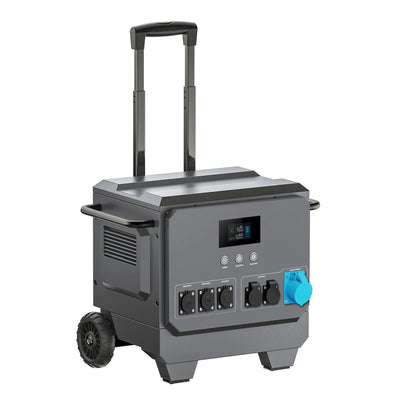
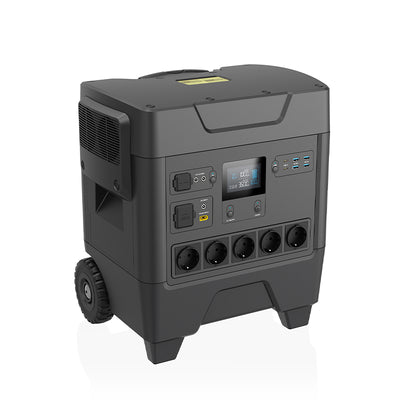
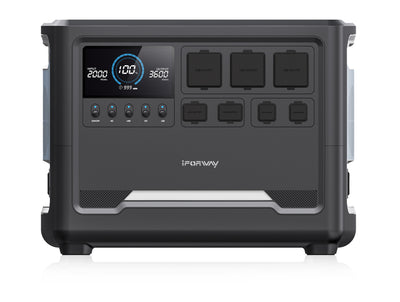
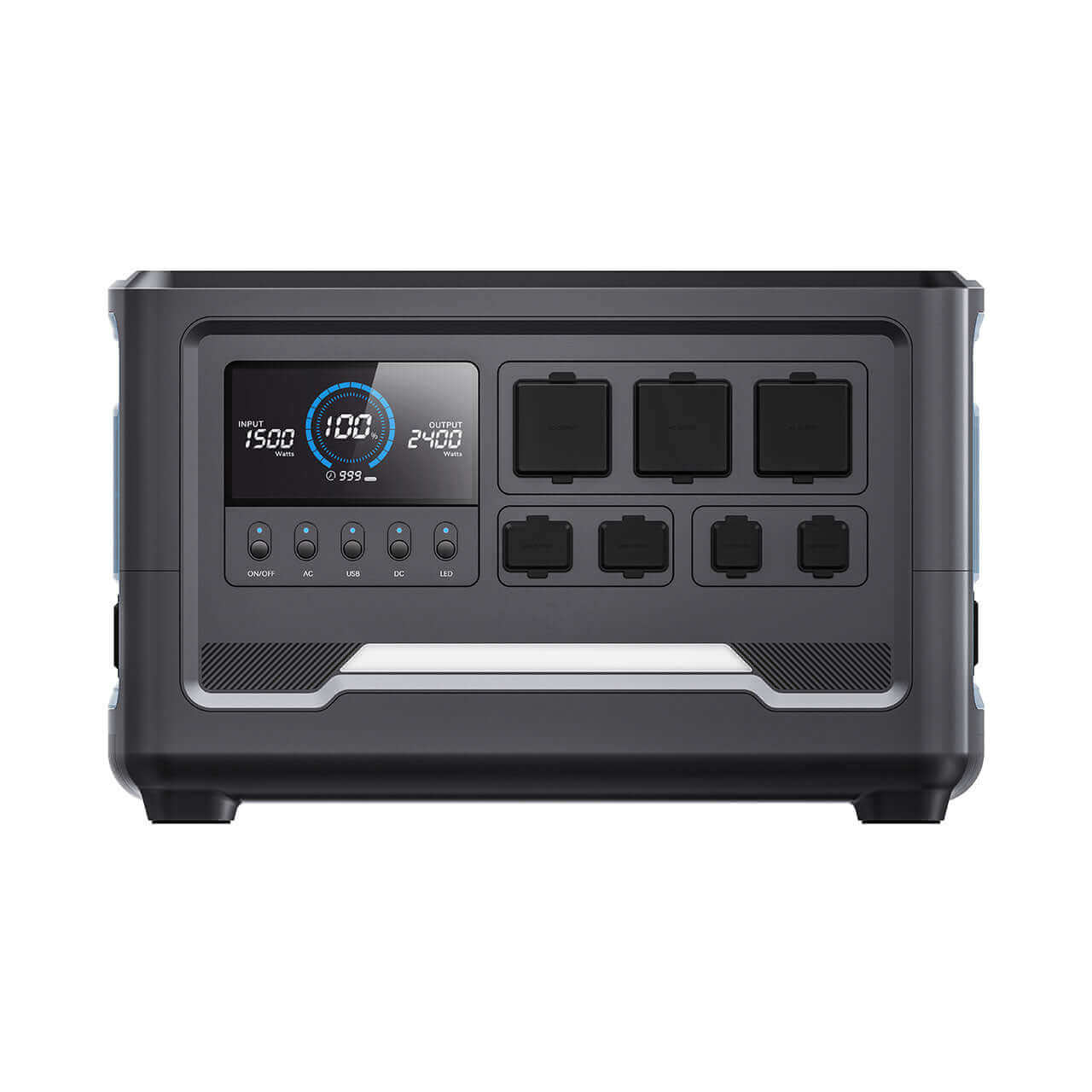
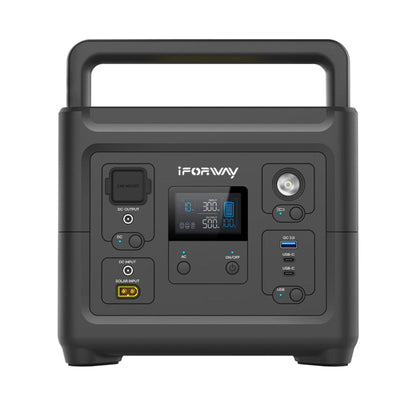

Direct answer: A portable power station is effectively silent — no exhaust note at all, and only 25–40 dB(A) of cooling-fan noise under heavy load — emits nothing at the point of use, and costs roughly €0.40 per delivered kWh on European grid power (near zero on solar). A 2.2 kW inverter generator typically measures 52–62 dB(A) at 7 metres, makes carbon monoxide that makes indoor use potentially lethal, and costs around €0.80 per kWh in fuel. The generator still wins in exactly two situations: very high total energy per kilogram carried, and sustained high-draw loads for many hours. On noise and emissions the battery wins outright; on cost the two cross over at roughly 245 hours of use per year.
Almost every comparison online argues about wattage — the least interesting number, because a 2.2 kW generator and a 3 kW power station run the same fridge. What decides whether you keep the thing is how loud it is, what it costs per hour, and whether you may switch it on where you need it.
Head-to-head: the numbers that matter
| Inverter generator (2.2 kW class) | Portable power station (3 kWh class) | |
|---|---|---|
| Sound at 7 m, typical load | 52–62 dB(A) | 0 dB at idle · 25–40 dB(A) fan at full load |
| Exhaust emissions at point of use | CO, NOx, particulates, ~1.0 kg CO₂ per kWh | None |
| Indoor / garage / tent use | Illegal in most EU markets; lethal risk | Fully permitted |
| Fuel cost per delivered kWh | €0.70–0.90 | €0.36–0.40 grid · €0 on solar |
| Endurance per "tank" | 4–8 h, then refuel (fuel must be stored) | 1.5–2.5 h AC recharge · 4–6 h solar |
| Upfront cost per kWh of usable capacity | €250–400 | €450–800 |
| Scheduled maintenance | Oil, filters, plug, carburettor, fuel stabiliser | None |
| Stored energy per kg carried | ~1 L petrol = 8.9 kWh thermal | ~7 kg per kWh electrical |
| Service life | 2,000–5,000 h before rebuild | 3,000+ full cycles (≈8–10 years daily) |
Noise: what 52 dB versus 40 dB really means
Manufacturers quote generator noise at a quarter load from seven metres, which is the most flattering configuration possible. Under real load — a fridge cycling, a kettle on, tools running — expect the top of the quoted range. Here is where each option sits against everyday reference sounds:
| Level | Reference sound |
|---|---|
| 0–20 dB | Recording studio · power station at idle |
| 30 dB | Quiet bedroom at night |
| 40 dB | Library · power station cooling fan under full load (at 1 m) |
| 50 dB | Quiet suburban street |
| 60 dB | Normal conversation at 1 m · good inverter generator at 7 m |
| 70 dB | Vacuum cleaner · open-frame generator at 7 m |
| 75 dB+ | Cheap open-frame generator at 3 m |
The decibel scale is logarithmic, and this is where most buyers misjudge the gap. Every +10 dB is ten times the sound energy and roughly twice the perceived loudness. So a 60 dB generator is not "50% louder" than a 40 dB power station — it carries around 100 times more acoustic energy. That is the difference between a sound you tune out and a sound the neighbours can identify through a closed window.
Distance helps less than expected: a point source loses about 6 dB per doubling. Getting a 58 dB generator down to 46 dB means moving it from 7 m to 28 m — and running a 30 m cable, with its own voltage-drop and tripping problems. A battery has no such trade-off: you put it where the load is.
The rules that matter more than the spec sheet
In Germany, the 32nd Ordinance to the Federal Immission Control Act (32. BImSchV) restricts operating many small generators in residential and spa areas, and quiet hours — 22:00 to 06:00 plus Sundays and public holidays — apply to noise-intensive equipment. EU-wide, the Outdoor Equipment Noise Directive (2000/14/EC) requires a guaranteed sound power level (LWA) label; small petrol sets commonly declare 88–96 dB LWA, roughly 11–13 dB above the pressure reading at 7 m. Never compare an LWA figure with a dB(A)@7m figure.
Camping is stricter still: many campsites in Germany, the Netherlands, Austria, Italy and Croatia — and most national parks — prohibit generators outright. If your use case is a tent, a van or a pitch with neighbours three metres away, the decision is already made.
Emissions: the CO problem and the CO₂ maths
Carbon monoxide is odourless, colourless and binds to haemoglobin roughly 200 times more readily than oxygen. Opening the garage door or running the unit "just inside the doorway" does not make it safe — generator CO incidents trace back to exactly that reasoning every year. No generator should run in a garage, cellar, boat cabin or tent, whatever the ventilation looks like.
On greenhouse gas the arithmetic is worth doing once. Petrol carries about 8.9 kWh of thermal energy per litre and releases 2.31 kg of CO₂ when burned; a small inverter generator at part load consumes roughly 0.45 L per delivered kWh, so:
- Generator: ≈ 1.0 kg CO₂ per kWh delivered, plus NOx and fine particulates released at ground level, right where you are sitting.
- Power station on the EU grid: ≈ 0.20–0.30 kg CO₂ per kWh with today's EU generation mix, and falling every year as renewables scale.
- Power station on solar: ≈ 0 kg CO₂ in operation — panels and battery carry a one-off manufacturing footprint amortised over a decade of use.
The same delivered kilowatt-hour is therefore roughly four times more carbon-intensive from a generator, before the local air-quality cost. For a household buying backup power that rarely changes the decision on its own; for a business reporting Scope 1 emissions or a municipality writing a specification, it usually does.
Running cost: the five-year numbers
Assume €1.80 per litre of petrol, 0.45 L consumed per delivered kWh, €0.36 per kWh of electricity (a German household rate in 2026), 90% round-trip efficiency on the battery, and a five-year horizon. Both machines are sized to deliver an average of 1 kW while running.
| Use per year | Inverter generator, 5-yr total | Power station, 5-yr total | Cheaper |
|---|---|---|---|
| 120 h — occasional camping, tailgating | €1,586 (€900 unit + €486 fuel + €200 servicing) | €1,840 (€1,600 unit + €240 electricity) | Generator, by €254 |
| 300 h — home backup + regular job site | €2,315 (€900 + €1,215 fuel + €200 servicing) | €2,200 (€1,600 + €600 electricity) | Power station, by €115 |
| 700 h — off-grid build, event power | €3,935 (€900 + €2,835 fuel + €200 servicing) | €4,600 (two units, €3,200 + €1,400 electricity) | Generator, by €665 |
The break-even sits near 245 hours per year. Work it out yourself: the battery costs roughly €1,600 plus €2.00 per running hour, the generator roughly €1,100 plus €4.05. Set those equal and solve. Above 245 h/yr the battery is cheaper; below it the generator is — but the generator also owes you a noise problem and cannot run indoors.
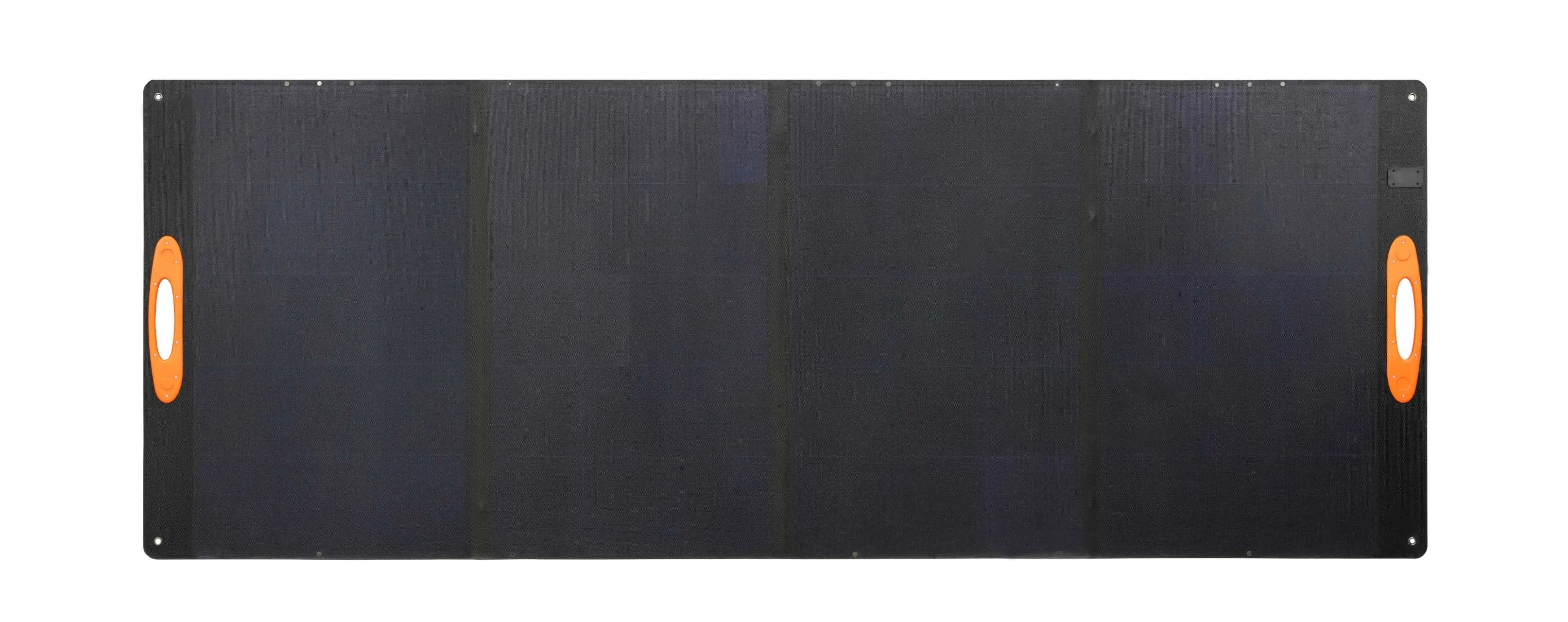
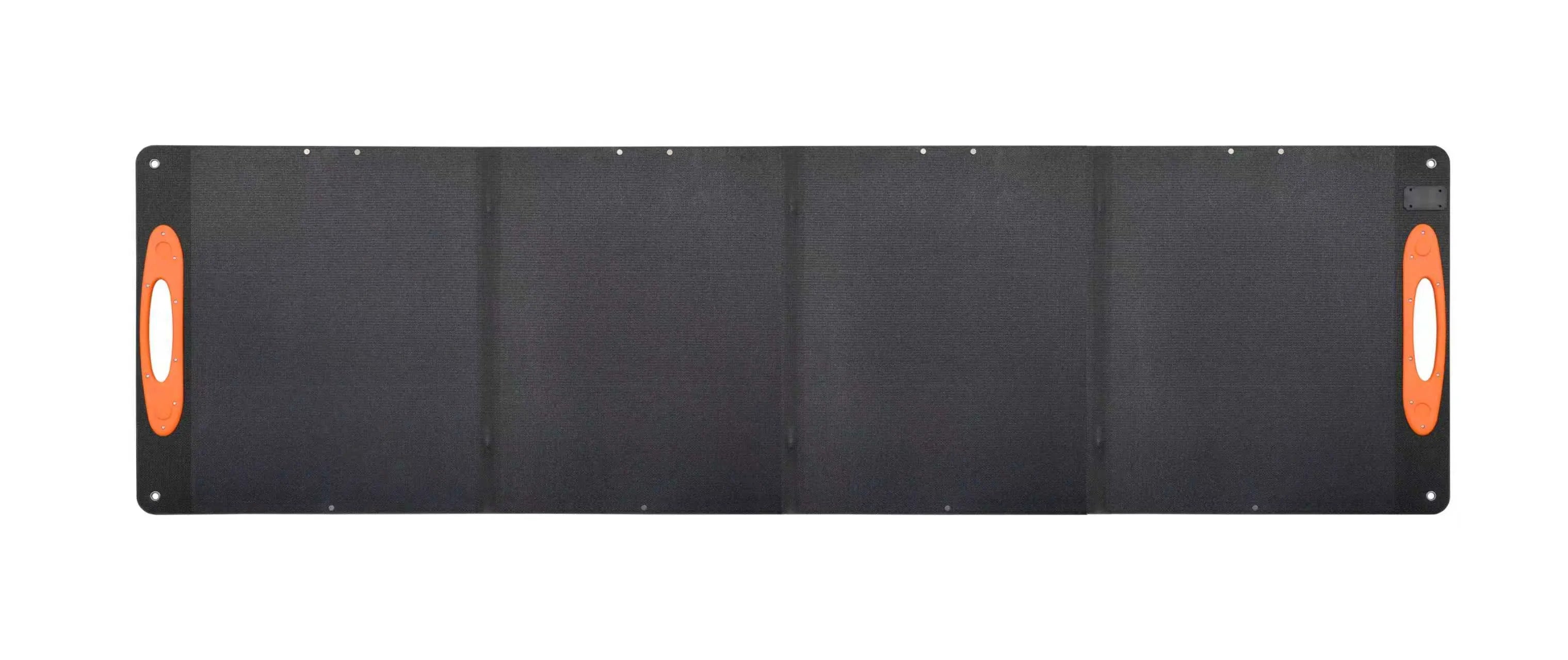
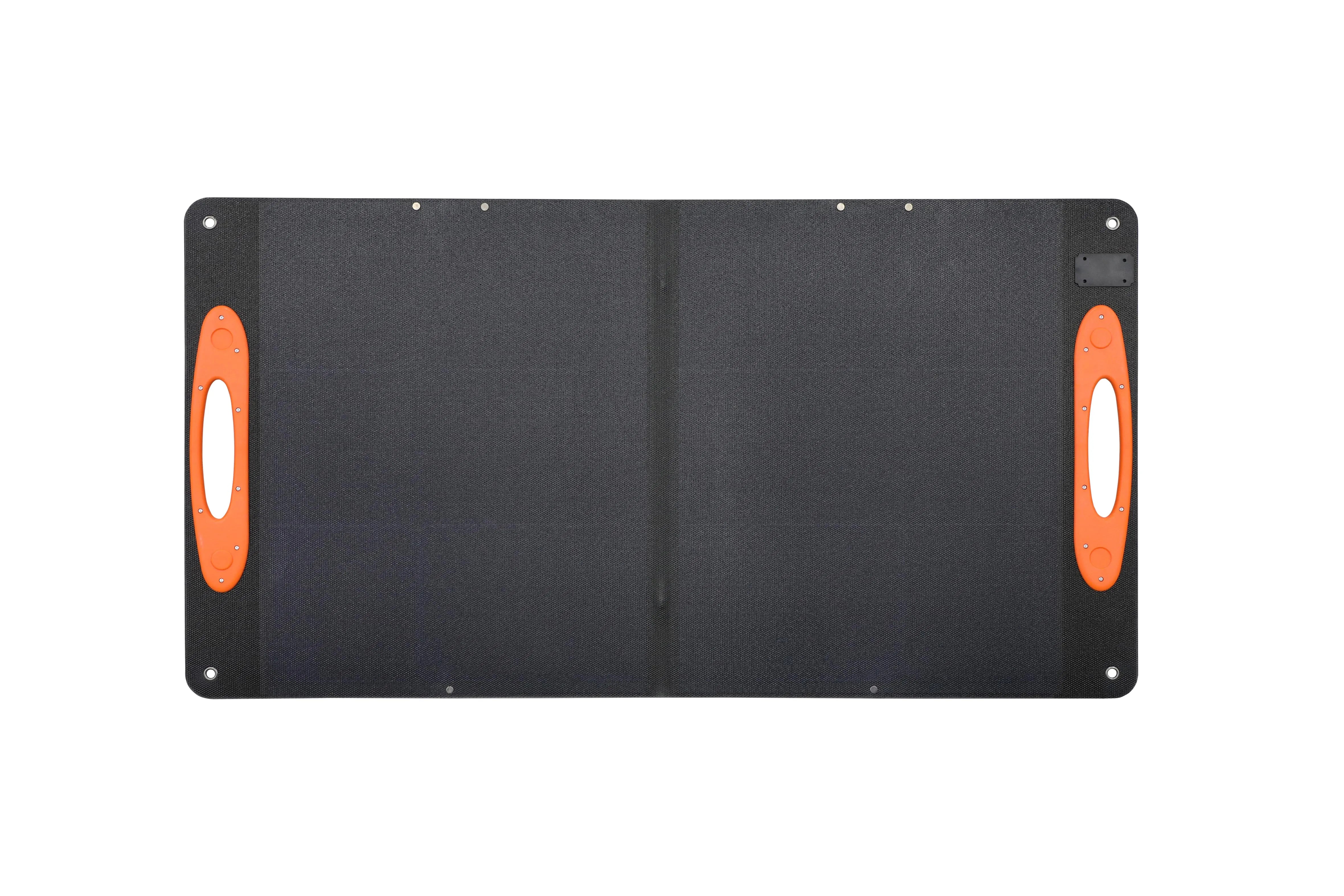
Two things move the crossover hard toward the battery. First, solar: a €300–500 folding array takes marginal cost per hour to zero, pulling break-even below 100 h/yr. Second, maintenance: oil changes, carburettor cleaning and fuel stabilising are not free, and stale petrol in a machine that runs twelve times a year is the most common reason a generator fails to start when it is finally needed.
Where the generator still genuinely wins
There are real jobs a battery cannot do in 2026:
- Multi-day continuous heavy load. A 700 h/yr site drawing 1 kW needs 700 kWh — hundreds of kilograms of batteries and constant recharging, versus 20 litres of petrol holding roughly 32 kWh of generation equivalent.
- Very high instantaneous draw. Welding, large compressors, mortar mixers and resistive heating at several kilowatts for hours still favour fuel, or a much larger and more expensive battery bank.
- Deep cold with no charging plan. LiFePO4 must not be charged below roughly 0 °C without heating, so cold-weather operation needs planning; a generator does not care about −15 °C.
- Refuelling is already in place. On a site with a fuel bowser and no grid connection, a generator integrates with what exists.
The setup most European buyers actually end up with
The pragmatic answer for a household, a van conversion or a small crew is not either/or — it is a battery as the primary source and a generator as a rarely used backstop. Run loads from the power station, keep the generator for the two or three weeks a year it is genuinely needed, and use it to recharge the battery rather than to feed loads directly. That cuts run-hours dramatically, keeps the machine at its efficient load point, and pushes noise away from where people sit.
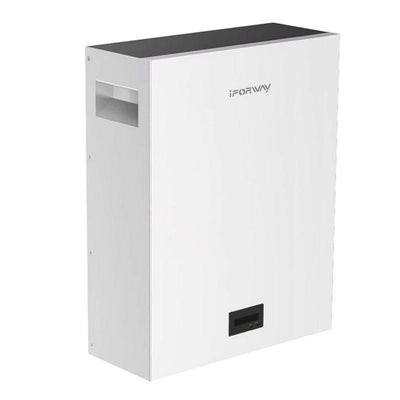
If you charge a power station from a generator, check output quality: some budget sets produce a dirty waveform that stresses the charger, so use a pure-sine set or a wide-tolerance AC charger. For whole-home arrangements the cleaner architecture is a home energy storage system with grid and solar input, where the generator is a manual last resort rather than the backbone.
Buying checklist
- Read the noise figure's conditions. Insist on dB(A) at a stated distance and load. "58 dB" with no distance is marketing, not data.
- Never compare LWA with dB(A)@7m. They differ by 11–13 dB, and the error always favours the seller.
- Check local rules before you buy fuel. Quiet hours and campsite bans can retire a generator you already paid for.
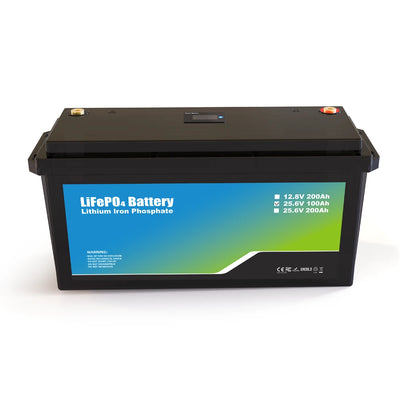
- On the battery, ask for usable capacity, cycle life and MPPT input wattage — not "rated watt-hours". A 3,072 Wh LiFePO4 unit realistically delivers about 2,600 Wh.
- If you buy a generator anyway, buy one with CO shutdown. It is the only feature on the machine that can save a life.
Frequently asked questions
How loud is a portable power station compared with an inverter generator?
A power station has no engine, so at idle it is effectively silent — you will not hear it from a metre away. Under sustained heavy load its fan reaches roughly 25–40 dB(A) at one metre, quieter than a library. A typical 2.2 kW inverter generator measures 52–58 dB(A) at seven metres at quarter load and 58–62 dB(A) under real load — roughly 100 times more acoustic energy, because the scale is logarithmic.
Is it cheaper to run a power station or an inverter generator?
Per delivered kilowatt-hour, always the power station: about €0.40 on European grid electricity and near zero on solar, against roughly €0.80 in petrol. On total five-year cost the answer depends on usage — the crossover is around 245 hours per year. Below that the generator's lower purchase price wins on cash; above it the battery does, and it wins regardless once you add solar.
Can I run a generator indoors if I vent the exhaust outside?
No. CO leaks from the machine itself, not only the exhaust outlet, and improvised ducting is not sealed. Generators must run outdoors, well away from windows, doors and air intakes — never in a garage, cellar or tent, even with the door open. Indoors, a battery power station is the only safe option.
Bottom line
Compare these two on wattage and you will buy the wrong one. Compare them on decibels, on cost per delivered kilowatt-hour, and on whether you may legally switch the thing on where you need it — and the answer becomes obvious for almost every household, van and small crew. The generator keeps its place for sustained heavy loads and extreme cold. Everything else has moved.
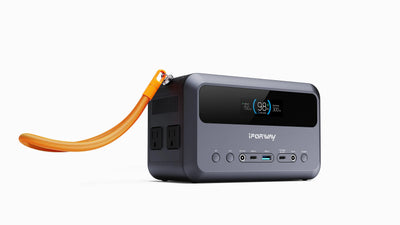
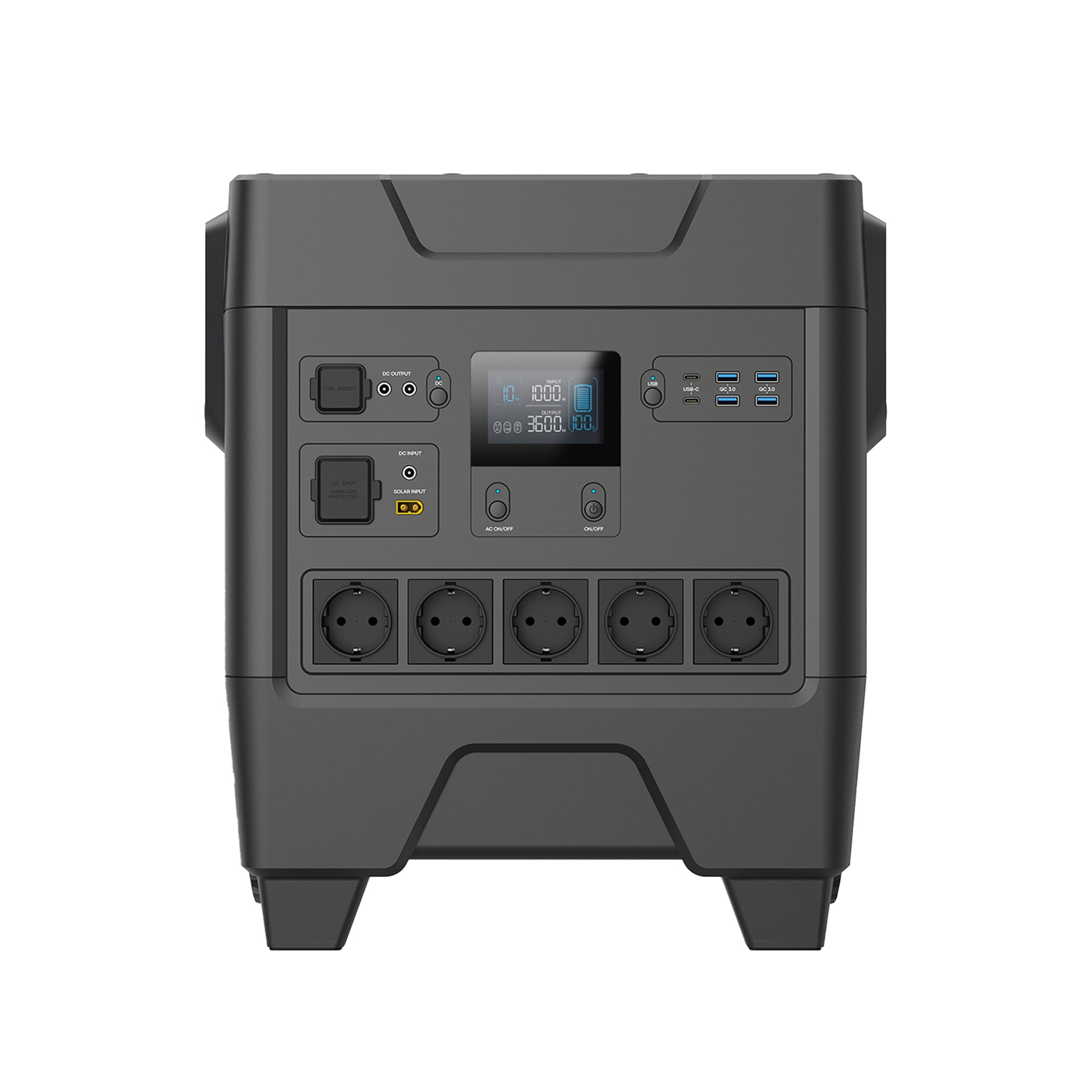
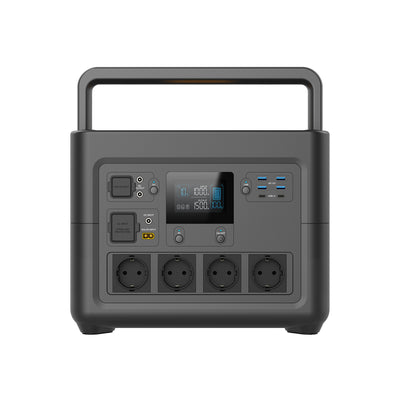
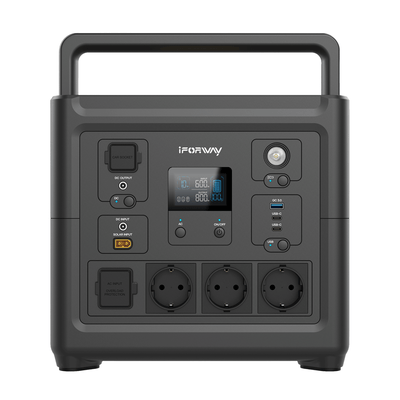
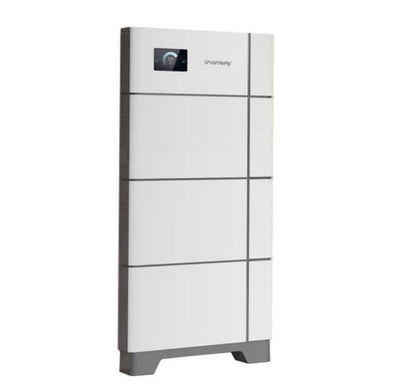
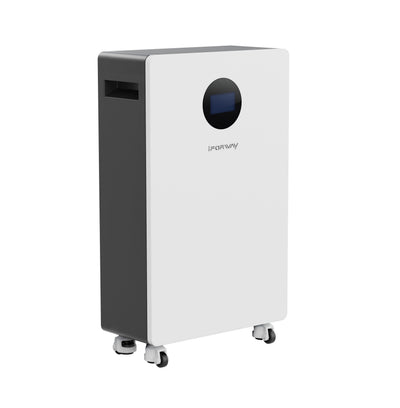
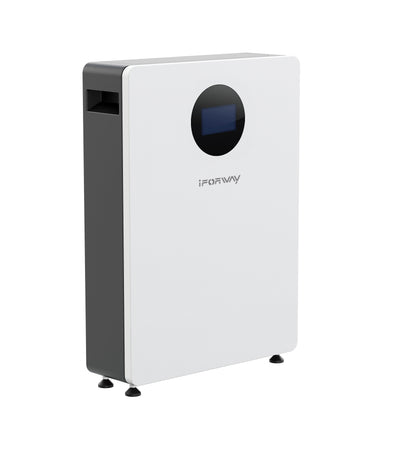
iFORWAY builds LiFePO4 power stations from 192 Wh handheld units up to 5 kWh wheeled systems with expansion support — including the HS3605 (3,072 Wh / 3,000 W), the home-backup oriented G36 (3,072 Wh / 4,000 W) and the compact G20 (1,024 Wh / 1,800 W). Distributors and OEM partners can review the ODM/OEM programme or request a quote — our team replies within 24 hours.
