



Direct answer: The best portable power station for contractors in 2026 needs four things a camping unit doesn't: 3,000 W or more of continuous AC output with high surge headroom for motors and compressors, sealed dust- and splash-resistant construction (IP54 or better), wheeled mobility above ~1,000 Wh, and enough usable capacity to carry a full workday of intermittent cutting, fastening and cleanup on a single charge. A 3 kWh LiFePO4 unit covers most two-person framing and finishing crews; 5 kWh covers demolition, compressors and multi-trade sites.
A campsite and a job site punish power stations in completely different ways. At camp, the load is LED lights and a fridge — gentle, predictable, low current. On site, you're starting motors under load all day: saws that draw three times their rated wattage for a fraction of a second on every cut, compressors that inrush hard at restart, dust that clogs every vent and cooling fan within a week. Most "job site ready" marketing ignores all of this. This guide breaks down what actually matters when a contractor buys one unit — or a fleet for an entire crew — with the runtime and cost tables to back it up.
The Five Requirements That Separate Contractor-Grade from Camping-Grade
- Continuous output with real surge headroom. Motor-driven tools draw 2–3× their running wattage at startup and again at every re-engagement. A 2,000 W unit that "runs a saw" on paper will trip its inverter the first time a miter saw kicks back into a dense board.
- Ingress protection. Concrete dust and silica particles kill unsealed electronics. IP54 — protected against dust ingress and water splashes from any direction — is the sensible floor for open sites; IP65 for exposed or outdoor work.
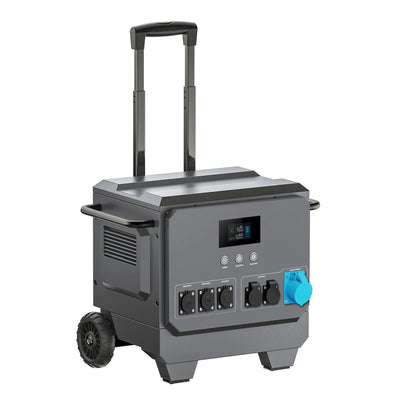
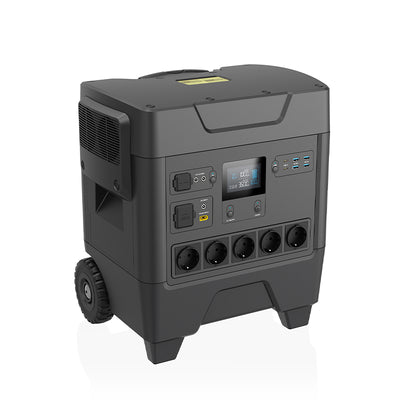
- Mobility. Every kilowatt-hour of LiFePO4 weighs roughly 6–8 kg. A 3 kWh unit is 20 kg-plus before the case; wheels and a telescoping handle turn that from a two-man lift into a one-hand roll between stations.
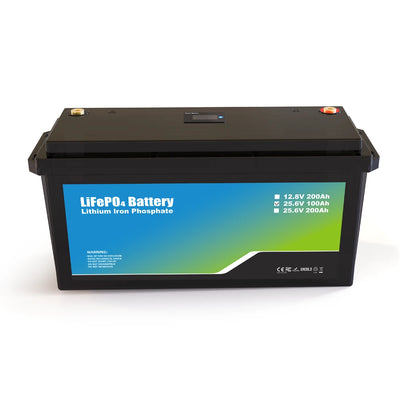
- Usable capacity and cycle life. LiFePO4 chemistry lets you discharge 80–90% of rated watt-hours every day for thousands of cycles. That's what makes daily job-site duty economical — lead-acid never could.
- Recharge flexibility. AC top-up over lunch, vehicle charging between sites, or solar on remote builds without temporary power. Multiple input paths are what keep the day running when there's no wall socket in sight.
Surge Watts: The Number That Trips Most Buyers
Inverter capacity ratings describe continuous load. Motors don't care. This table shows typical running and surge values for the tools contractors actually plug in — and whether a 3 kWh / 3,000 W class unit handles them:
| Tool (typical site model) | Running watts | Surge / inrush | 3,000 W class unit? |
|---|---|---|---|
| Corded circular saw 7-1/4″ | 1,400 W | ~2,500 W | ✅ Easy |
| Miter saw 10″ | 1,600 W | ~2,800 W | ✅ Yes |
| Table saw 10″ | 1,800 W | ~3,600 W | ✅ Yes (surge-rated inverter) |
| Wet/dry vacuum | 1,200 W | ~2,000 W | ✅ Easy |
| Air compressor 2 HP | 1,500 W | ~4,000–4,500 W restart | ⚠️ Needs 6,000 W peak or larger |
| 4-bay tool battery charger bank | 400–600 W | Minimal | ✅ Trivial |
| Cut-off saw 14″ ( abrasive ) | 2,200 W | ~4,000 W | ❌ Step up to 5 kWh / 6,000 W class |
The lesson: it's never the running wattage that ends the job early — it's the restart. Compressors are the classic breaker: a 1,500 W compressor restarting against head pressure can spike past 4,000 W for half a second. That's why serious contractor units advertise a peak rating well above their continuous number, and why a wheeled 6,000 W unit exists at all.
Runtime Tables: What a Day of Work Actually Costs
Rated watt-hours overstate runtime, so work from usable capacity: LiFePO4 delivers 80–90% of rated Wh reliably, and tool duty cycles (the share of wall-clock time a tool is actually cutting) run 20–35%. Here's what realistic intermittent use looks like on a 3,072 Wh unit (~2,600 Wh usable):
| Load pattern | Math | Runtime on 3,072 Wh (usable ~2,600 Wh) |
|---|---|---|
| Circular saw, intermittent (25% duty) | 1,400 W × 0.25 = 350 W avg | ~7.4 h of wall-clock cutting work |
| Miter saw at a trim station (15% duty) | 1,600 W × 0.15 = 240 W avg | ~10.8 h |
| Wet/dry vac cleanup (30% duty) | 1,200 W × 0.30 = 360 W avg | ~7.2 h |
| Charger bank + jobsite radio + LED work lights | ~300 W continuous | ~8.6 h |
| Table saw, heavy ripping (40% duty) | 1,800 W × 0.40 = 720 W avg | ~3.6 h |
A two-person framing crew typically burns 1.5–2.5 kWh per working day across saws, vac and chargers — comfortably inside one 3 kWh charge. Demolition crews with compressors and cut-off saws run 4–6 kWh, which is exactly the case for a 5 kWh base unit with expansion capacity. For a deeper dive on single-tool math, our table saw runtime guide walks through the calculations tool by tool.
Durability: What Actually Breaks on Site
Three failure modes dominate real-world warranty claims on portable power:
- Dust ingestion. Fine concrete and silica dust passes through unsealed seams and coats inverter heatsinks and fan bearings until the unit thermally throttles — often permanently. Sealed (IP54+) enclosures with filtered passive cooling sidestep this entirely.
- Transport shock. Units get dropped off tailgates and rolled over thresholds. Reinforced corner casings, a steel or aluminum frame around the battery module, and shock-isolated internals are what separate contractor builds from consumer ones.
- Moisture at connections. Morning dew and rain splash into open AC sockets. Covered, gasketed outlets aren't cosmetic — they're the difference between a unit that survives a wet season and one that doesn't.
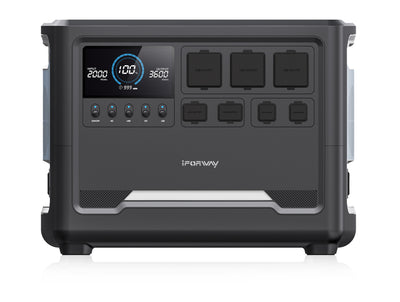
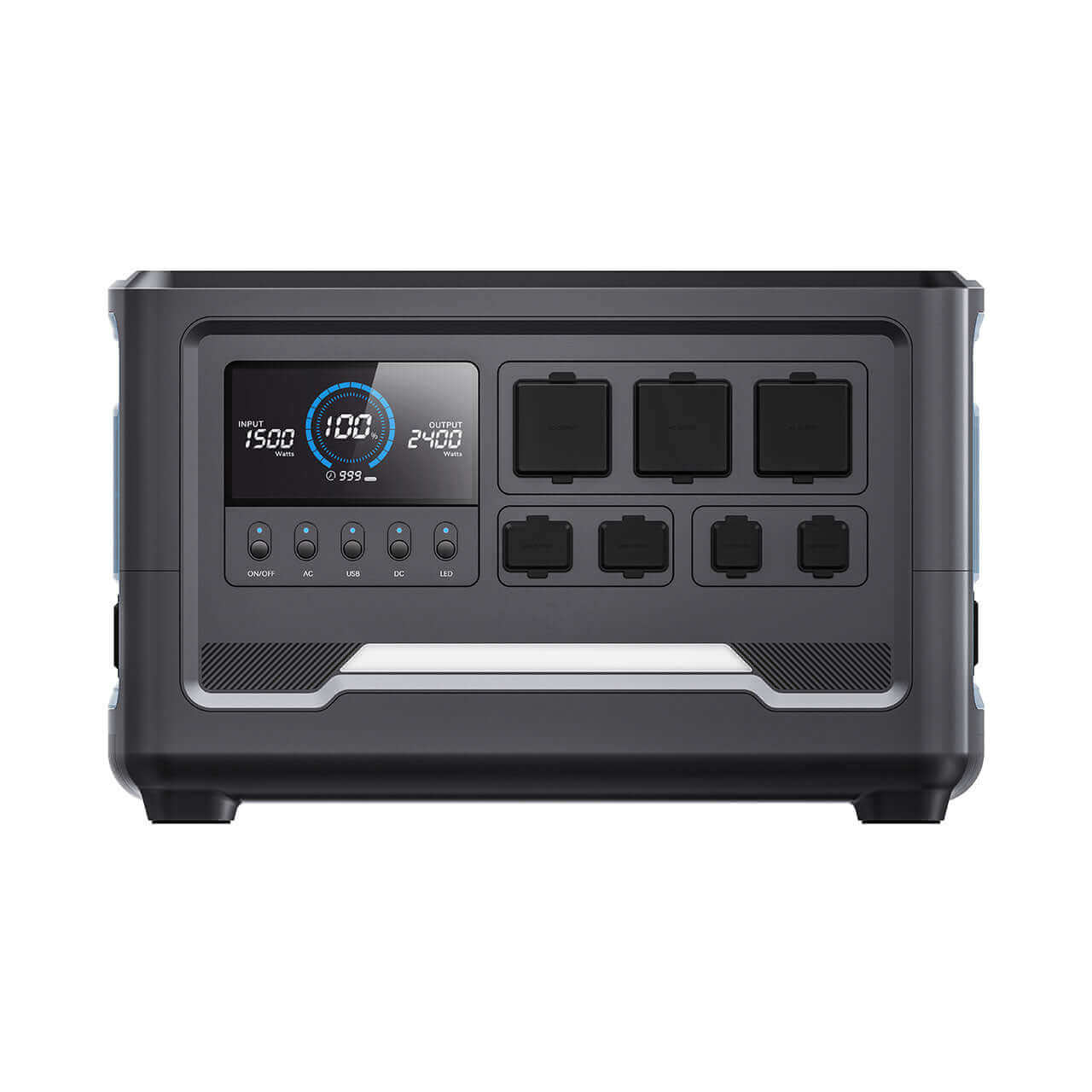
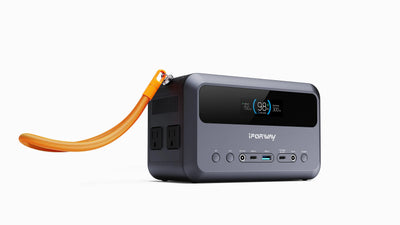
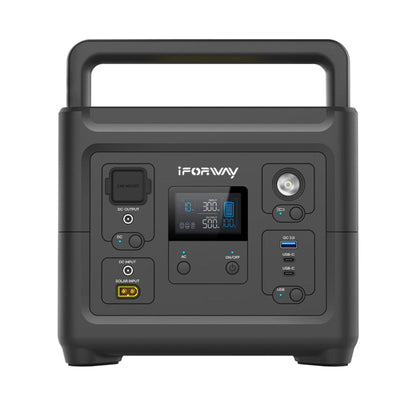
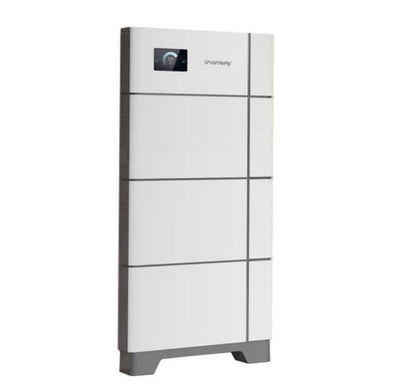
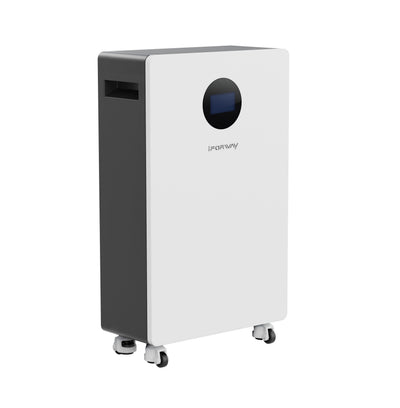
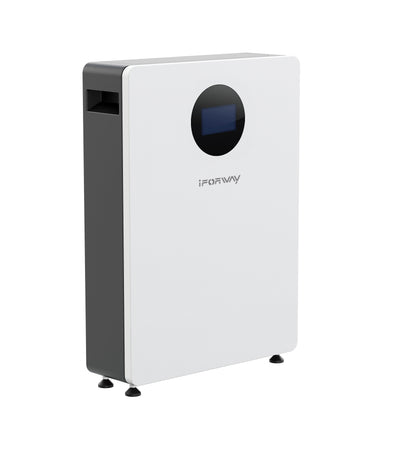
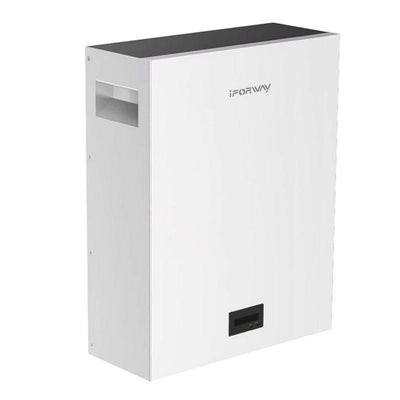
This is also why unit-level IP ratings matter more than marketing photos. The iFORWAY M3003 (3,072 Wh, 3,000 W continuous, IP54-rated enclosure) was designed around exactly these three failure modes, and its wheeled sibling layout repeats across the higher-capacity models below.
Three-Year Cost: Battery vs Rental Generator
The financial argument no longer favors fuel. Using typical Western European rental rates (€35–50/day for a 3–4 kVA generator, plus €10–15/day in fuel) against a 220-day working year:
| Cost line (3 years, 220 workdays/yr) | Rental generator | Owned 3 kWh power station |
|---|---|---|
| Hardware | €30,000+ (cumulative rental) | One-time purchase |
| Fuel / electricity to recharge | €6,600–9,900 | ~€120–180 (grid recharges at ~€0.05/charge) |
| Oil, filters, servicing, transport | Included in most rental, but hassle | €0 — sealed LiFePO4, no consumables |
| Noise-restricted or indoor work | Often not permitted | Fully allowed (near-silent) |
| Fumes on indoor finish work | CO hazard — prohibited | None |
Even before the second year, the cumulative rental line exceeds the outright price of a premium 3 kWh unit — and the battery keeps working for years after. A quality LiFePO4 pack retains most of its capacity past 3,000 cycles, which at one deep cycle per workday is a decade of service.
Charging Strategy on a Working Day
The units above recharge from three sources, and smart crews stack them:
- Mains AC (fastest): most 3 kWh-class units refill fully in 1.5–2.5 hours — an extended lunch break on a site with temporary power.
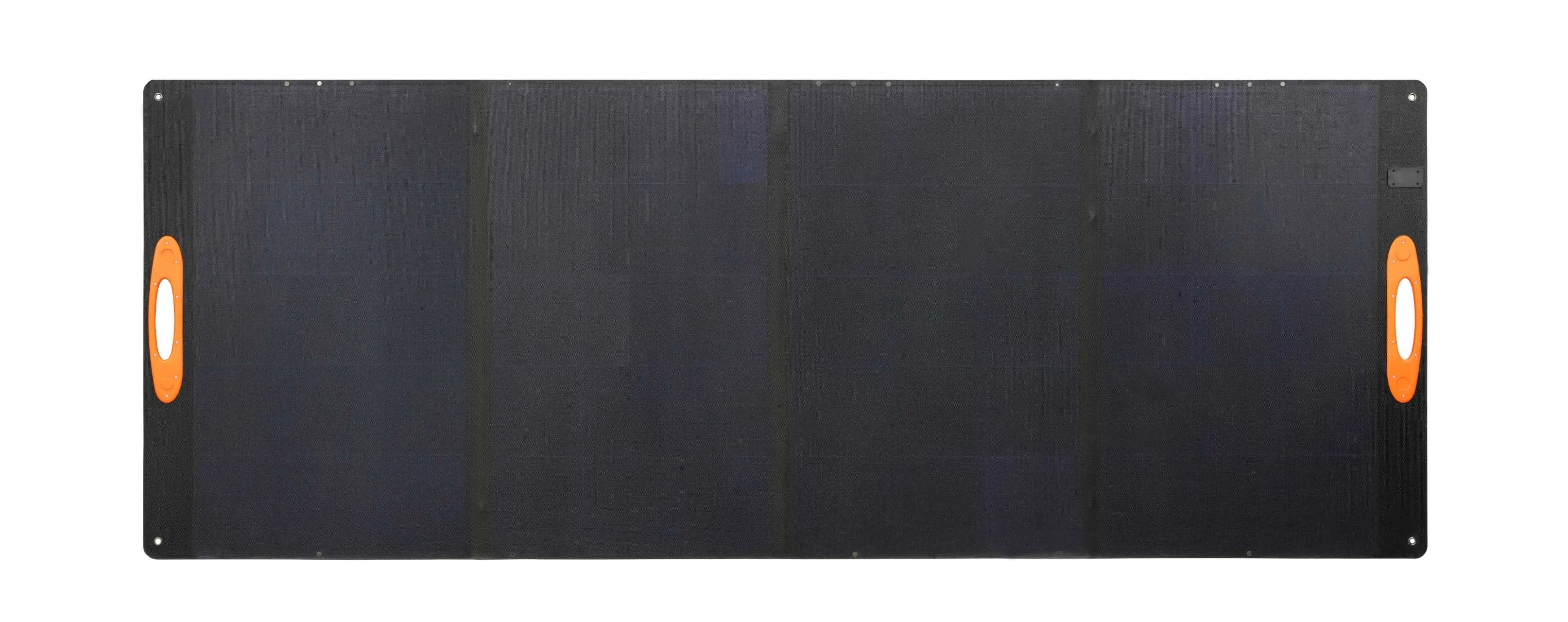
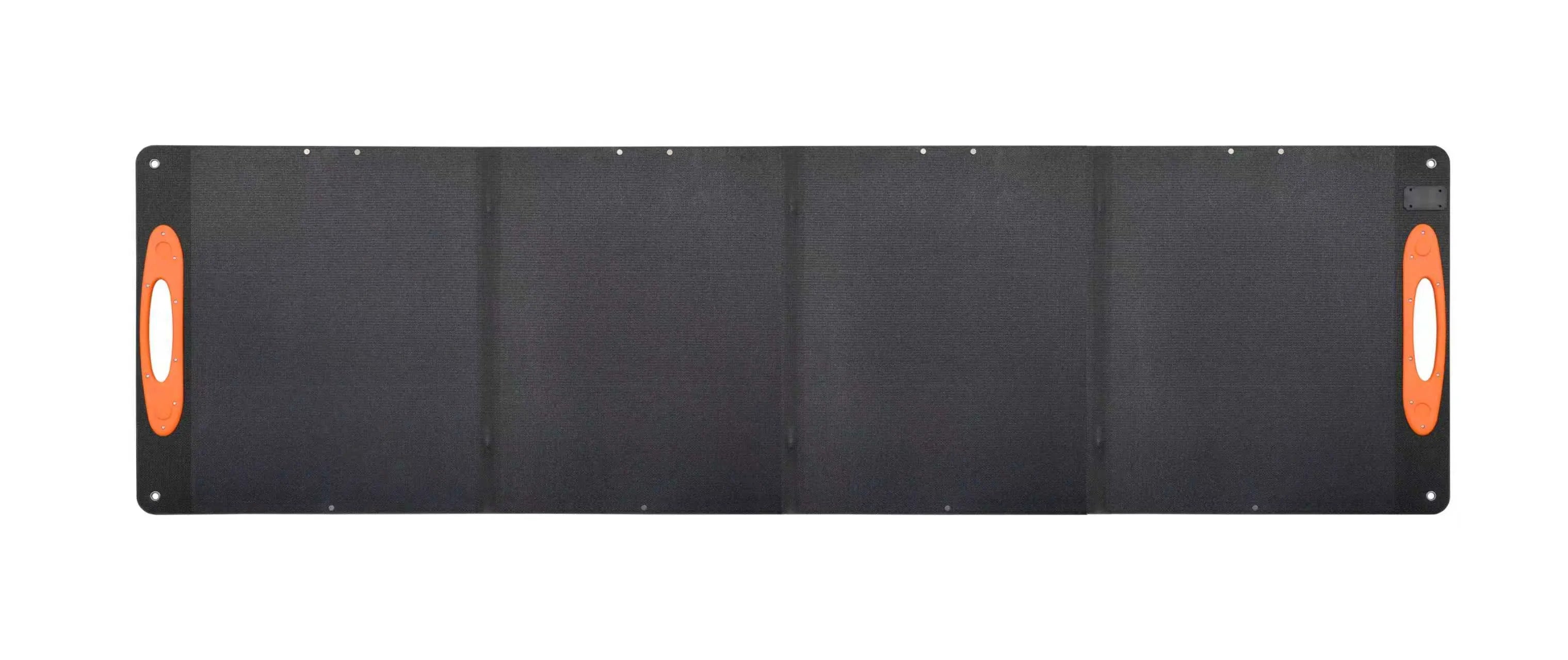
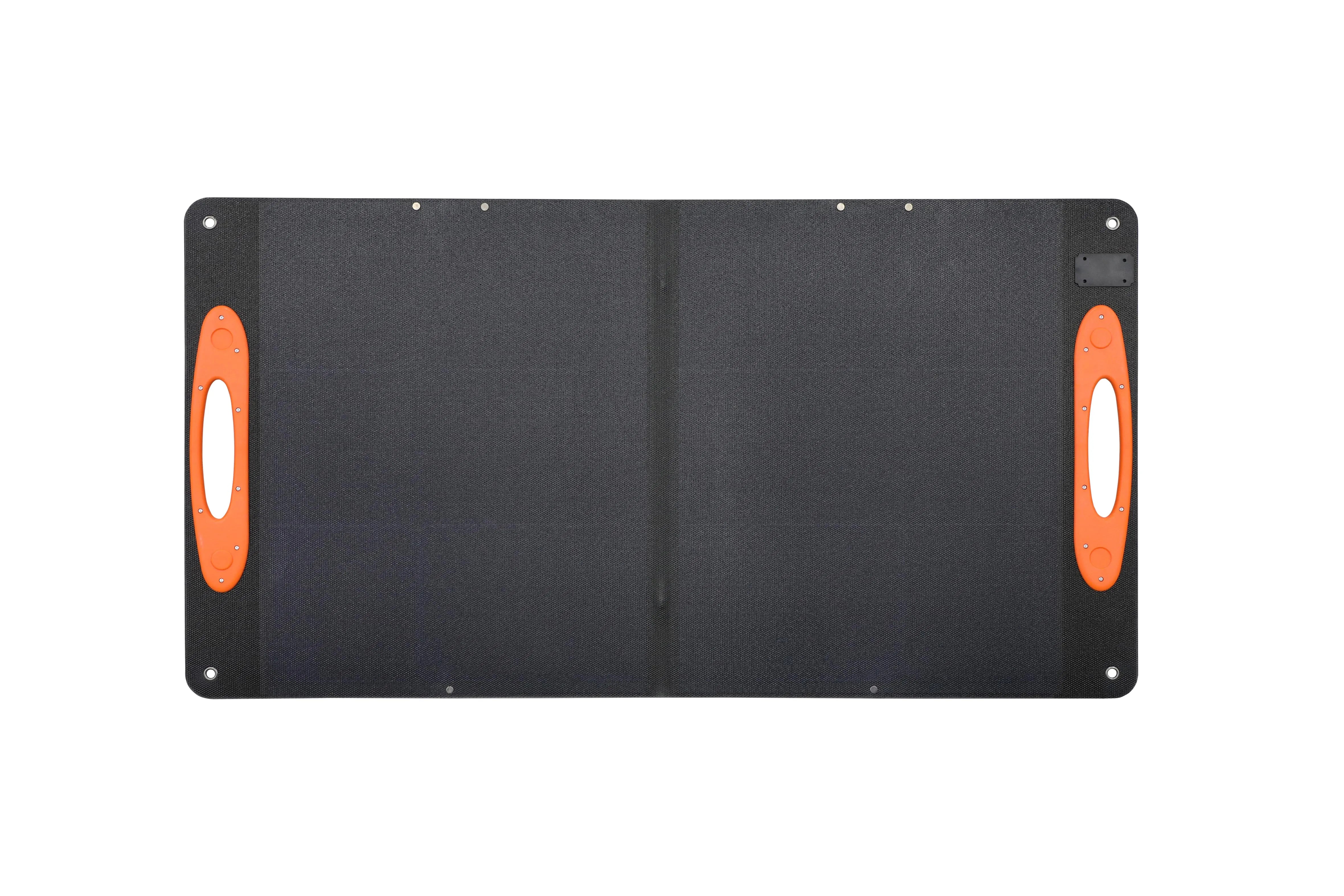
- Solar (free, off-grid): a 3,072 Wh unit with a ~1,200 W MPPT input takes four to five 200 W panels. On remote builds with no temporary supply, a folding array turns the station into a self-sufficient site hub; our power tools and job sites guide covers panel pairing in detail.
- Vehicle DC between sites: slower, but enough to recover 20–30% while driving between jobs.
Which Capacity Fits Which Crew
| Crew / trade | Daily usable load | Recommended class |
|---|---|---|
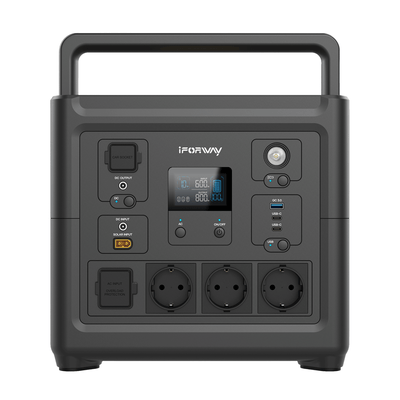
| Finish carpenter, single tradesperson | 1–1.5 kWh | 1–2 kWh compact (e.g., G20, 1,024 Wh / 1,800 W) |
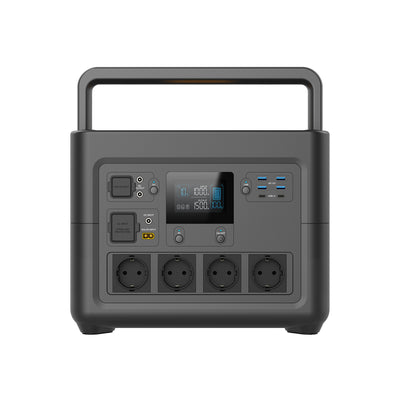
| Framing / trim crew, 2–3 people | 1.5–2.5 kWh | M3003 (3,072 Wh / 3,000 W, IP54) or HS3605 (3,072 Wh / 3,000 W, wheeled) |
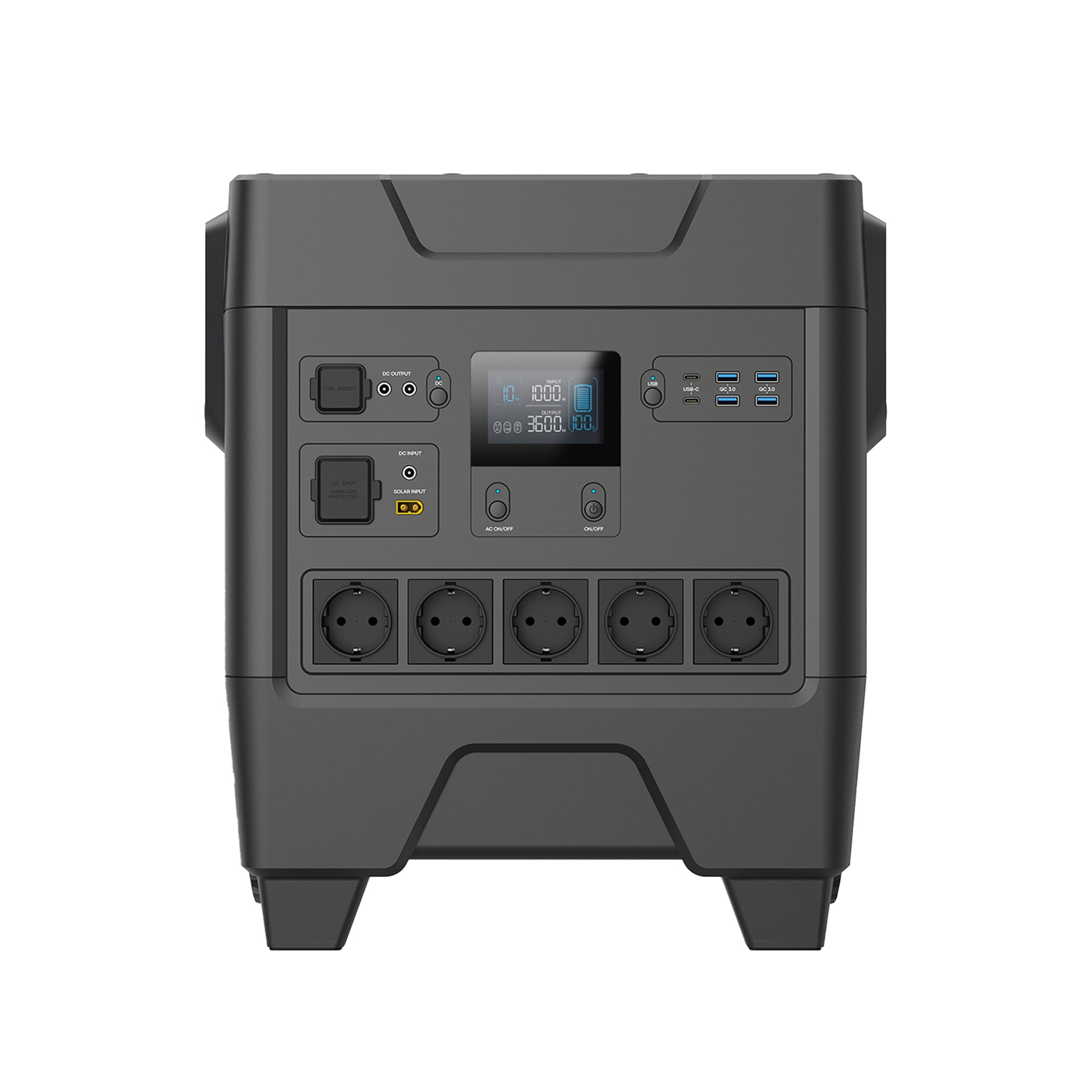
| Demolition, concrete, multi-trade site | 4–6 kWh | M5002 (5,018 Wh / 6,000 W, 12 kW peak, wheeled) |
| Site office + tools + backup | 2–4 kWh + resilience | G36 class (3,072 Wh / 4,000 W) with expansion |
Procurement Checklist for Fleet Buyers
- Verify peak rating against your worst tool — the compressor restart test above, not the nameplate wattage.
- Confirm IP rating in writing, not in imagery — and match it to site exposure (IP54 open sites, IP65 outdoor).
- Check chemistry and cycle warranty: LiFePO4 with a stated cycle life (3,000+ cycles at 80% depth) is the procurement-grade standard.
- Standardize charging: one AC charger type plus one panel ecosystem across the fleet keeps spares and training simple.
- Buy expandability: expansion batteries let a 3 kWh unit grow to 5+ kWh instead of replacing it — for distributors, that's an upsell path; for contractors, a future-proofing path.
Frequently Asked Questions
Can a portable power station really replace a generator on a job site?
For most carpentry, finishing, electrical and renovation work — yes, and it does jobs a generator legally can't: indoor finish work, noise-restricted sites, and fume-sensitive environments. Only sustained high-draw loads (large compressors, welders, mortar mixers) still justify fuel. A 3 kWh / 3,000 W unit covers the majority of two-person trades; 5 kWh / 6,000 W covers heavy demolition.
What size power station do I need for a miter saw and a compressor together?
Size by the compressor's restart, not the miter saw: a 2 HP compressor restarting against head pressure can spike past 4,000 W. You need a unit with roughly 6,000 W peak output (such as the HS3605 or M5002 class) to run both simultaneously without nuisance trips. If the compressor runs alone and the saw is intermittent, a 3,000 W / 6,000 W peak unit is usually sufficient.
How long does a 3,000 W power station last per charge on site?
It depends on duty cycle, not the nameplate. Realistically a 3,072 Wh LiFePO4 unit delivers about 2,600 usable Wh: roughly 7 hours of intermittent circular-saw work, 8+ hours of chargers and work lights, or 3–4 hours of heavy table-saw ripping. Most two-person crews finish a normal day on one charge and top up over lunch or overnight.
Bottom Line
Contractors don't need the biggest power station — they need the right one: enough surge headroom for the worst motor on site, sealed enough to survive its dust, wheeled enough that someone actually moves it, and cheap enough per delivered kilowatt-hour to beat a rental invoice within a year. Get those four right and the unit pays for itself before the second quarter ends.
Specifying site power for your crews — or building a contractor-grade power station line for your market? iFORWAY manufactures wheeled, IP-rated LiFePO4 power stations from 1 kWh to 5 kWh with expansion support for distributors and fleet buyers worldwide. Explore the OEM/ODM program or request a quote and our team will respond within 24 hours.
