

Contractors, woodworkers, and serious DIYers have the same question when they first consider swapping a gas generator for a battery: how long will a power station run a table saw? The answer depends on the saw, the battery, and how you use them — but the math is straightforward once you know the numbers.
This guide gives you real-world runtime tables for common table saws, explains the difference between surge and running watts, and shows you how to size a portable power station for a full day of cutting on the job site or in your workshop.
Table Saw Power Consumption: The Basics
Every table saw has two power numbers that matter:
- Running watts — the continuous power drawn while the blade is spinning under load. For most 10-inch portable table saws this is 1,200–1,800W.
- Surge (starting) watts — the brief spike when the motor starts or when the blade bites into hardwood. Induction motors can pull 2× to 3× their running watts for a fraction of a second.
A power station must handle the surge and sustain the running load. If the surge exceeds the station's inverter peak rating, the motor will not start — or the station will shut down to protect itself. That is why contractors shopping for a job site battery need to look past the headline wattage and check the peak rating too.
Why Contractors Are Switching to Battery Power
Gas generators have dominated job sites for decades, but portable power stations are now a viable replacement for many contractor workflows. The benefits are clear: silent operation, zero exhaust fumes, no fuel spills, and instant start at the press of a button. For indoor renovations, enclosed decks, residential neighborhoods with noise ordinances, and overnight security-lighting setups, a battery is often the only practical choice.
The trade-off is runtime. A gas generator refuels in minutes; a battery must be recharged. The key is sizing the station to match the workday — or pairing it with solar top-up — so you never run out of juice mid-cut.
Runtime Table: How Long Will a Power Station Run a Table Saw?
The table below uses realistic running wattages and accounts for inverter efficiency (~90%). Actual runtime varies with blade sharpness, wood density, and duty cycle (how often the motor is actually cutting versus idling).
| Table Saw Model (approx.) | Running Watts | Surge Watts | 1,800Wh Station | 3,600Wh Station |
|---|---|---|---|---|
| Compact bench saw (8–9 in) | 900W | 1,800W | ~1.6 hrs | ~3.2 hrs |
| Standard portable saw (10 in) | 1,500W | 3,000W | ~1.0 hr | ~2.0 hrs |
| Contractor saw (10 in, 2HP) | 1,800W | 3,600W | ~0.9 hr | ~1.8 hrs |
| Hybrid cabinet saw (1.5–2HP) | 2,200W | 4,400W | Not recommended | ~1.4 hrs |
Figures assume 90% inverter efficiency and continuous full-load cutting. In real use — with start-stop cutting, blade idling, and lighter materials — actual usable runtime is often 20–40% longer.
Why Surge Watts Matter More Than You Think
Table saw motors are induction-type loads. When you flip the switch, the inrush current can hit 2,000–4,500W for 100–300 milliseconds. A power station rated for 2,000W continuous but only 2,500W peak may struggle to start a 1,800W contractor saw.
Rule of thumb: choose a station whose peak (surge) rating is at least 1.5× the saw's running watts, and ideally 2×. For a 1,500W portable saw, that means a station with a 3,000W+ surge rating.
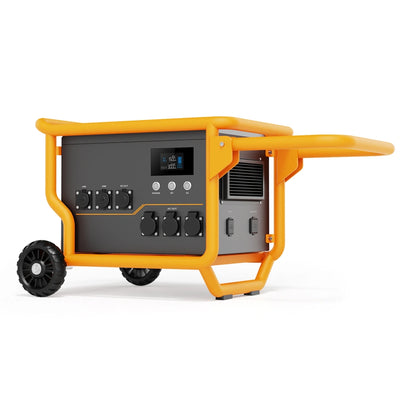
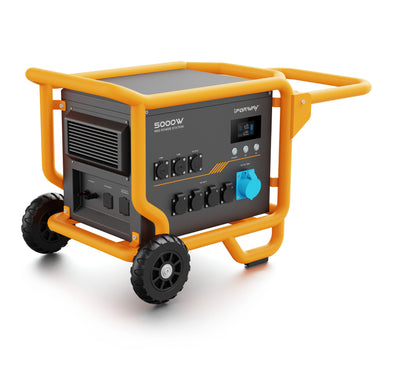
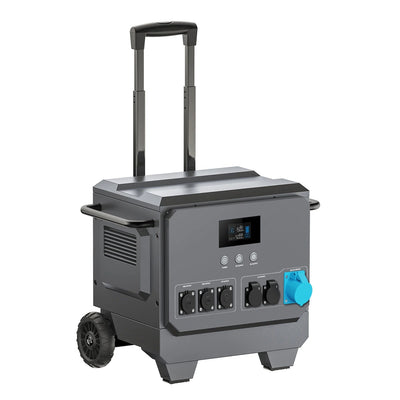
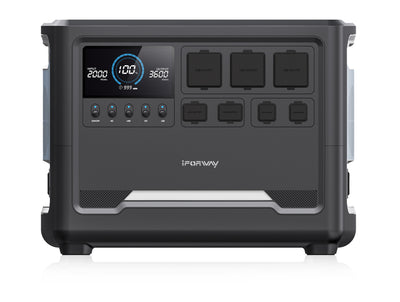
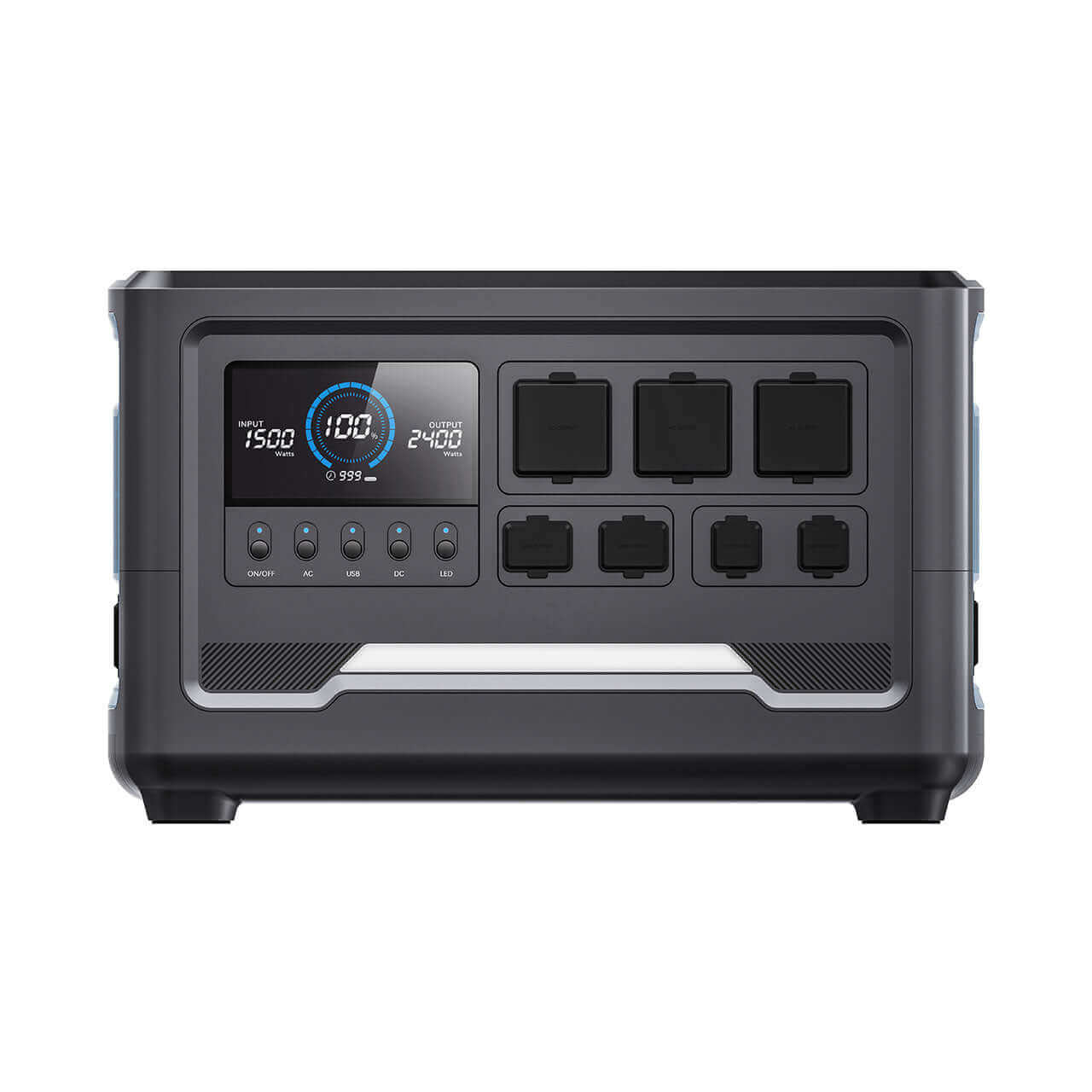
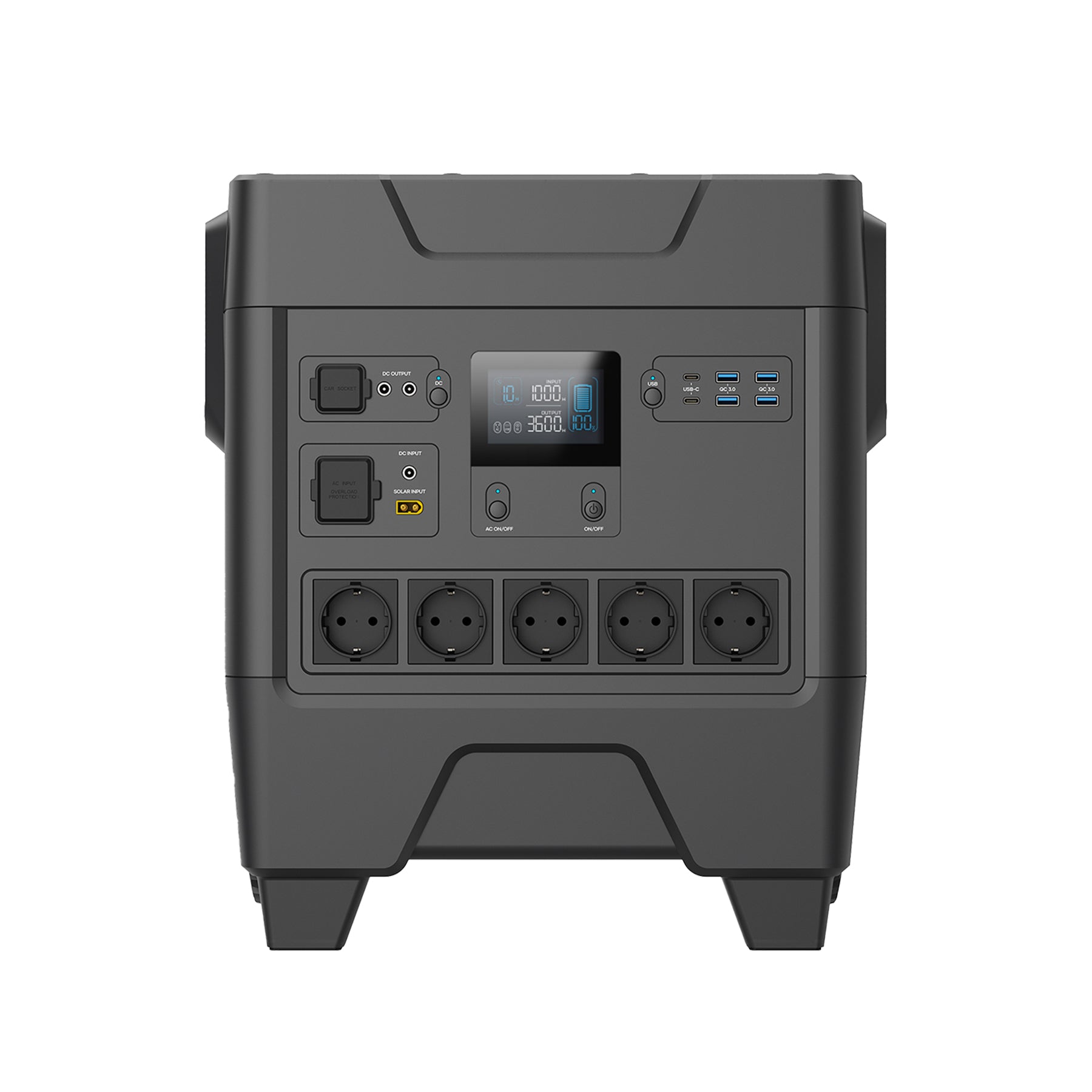
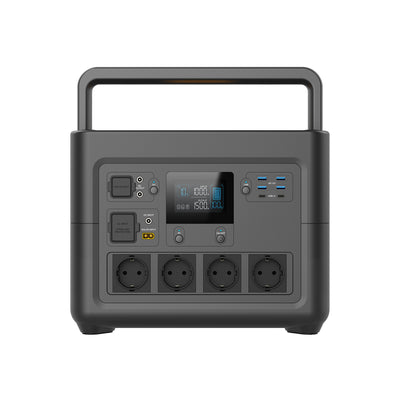
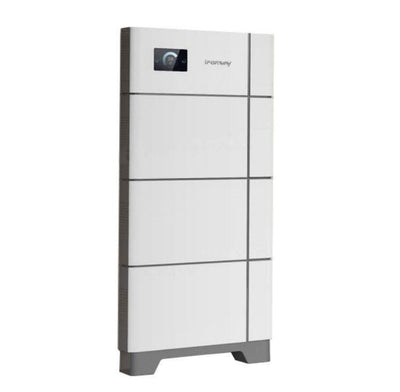
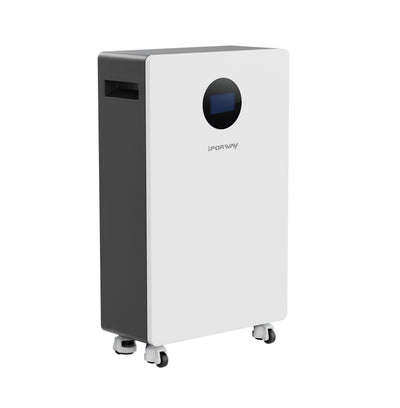
The iFORWAY HS3600 portable power station delivers high continuous output with the surge headroom needed for induction motors, making it a practical choice for contractor saws and other high-torque tools.
Duty Cycle: The Real-World Multiplier
Few woodworkers run a table saw continuously for an hour. Most cuts last 10–30 seconds, followed by measuring, adjusting, and material handling. That idle time is effectively free in terms of battery drain.
- Light duty (measurement-heavy projects): the motor runs ~20% of the time. A 3,600Wh station can last a full 8-hour workday.
- Medium duty (framing, decking): ~40% run time. Expect 4–5 hours of real-world use.
- Heavy duty (ripping sheet goods, production work): ~70% run time. Plan for 2–3 hours and keep a second station or solar panels on standby.
Can You Run Other Tools on the Same Station?
Yes — if you size for the combined load. A typical contractor setup might include:
- Table saw: 1,500W running
- Shop vacuum: 800W running
- Work light: 60W
- Phone / radio charging: 50W
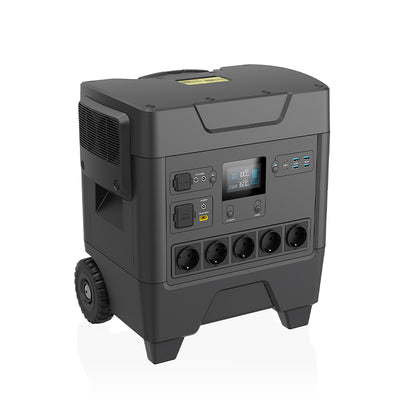
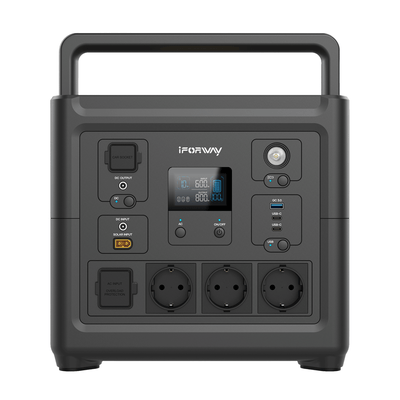
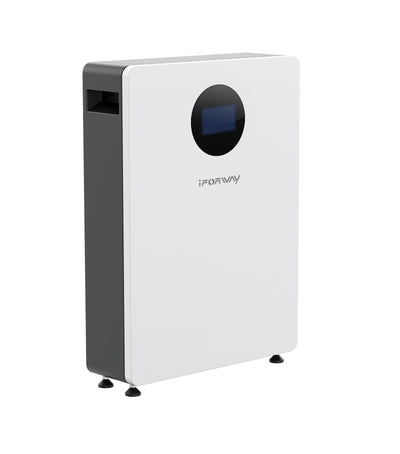
Combined running load: ~2,400W. You would need a station rated for at least 2,500W continuous and 4,500W+ surge. The HS3600 handles this class of load, while the mid-size HS1800 solar generator is better suited for lighter bench saws and solo tool use.
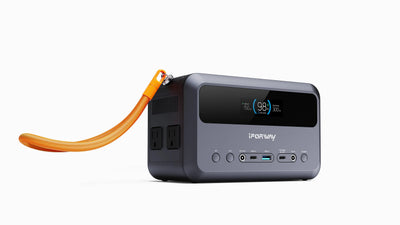
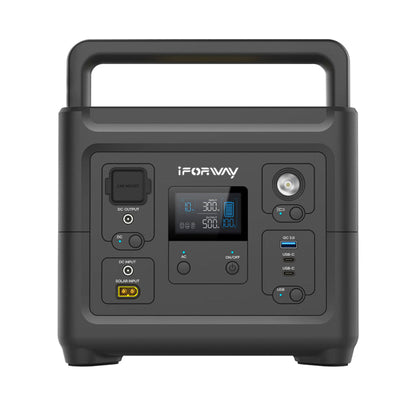
For small repairs and mobile jobs, the compact iFORWAY G02 portable power station runs chargers, lights, and small rotary tools — though it is not intended for full-size table saws.
Solar Top-Up: Extending Runtime on the Job Site
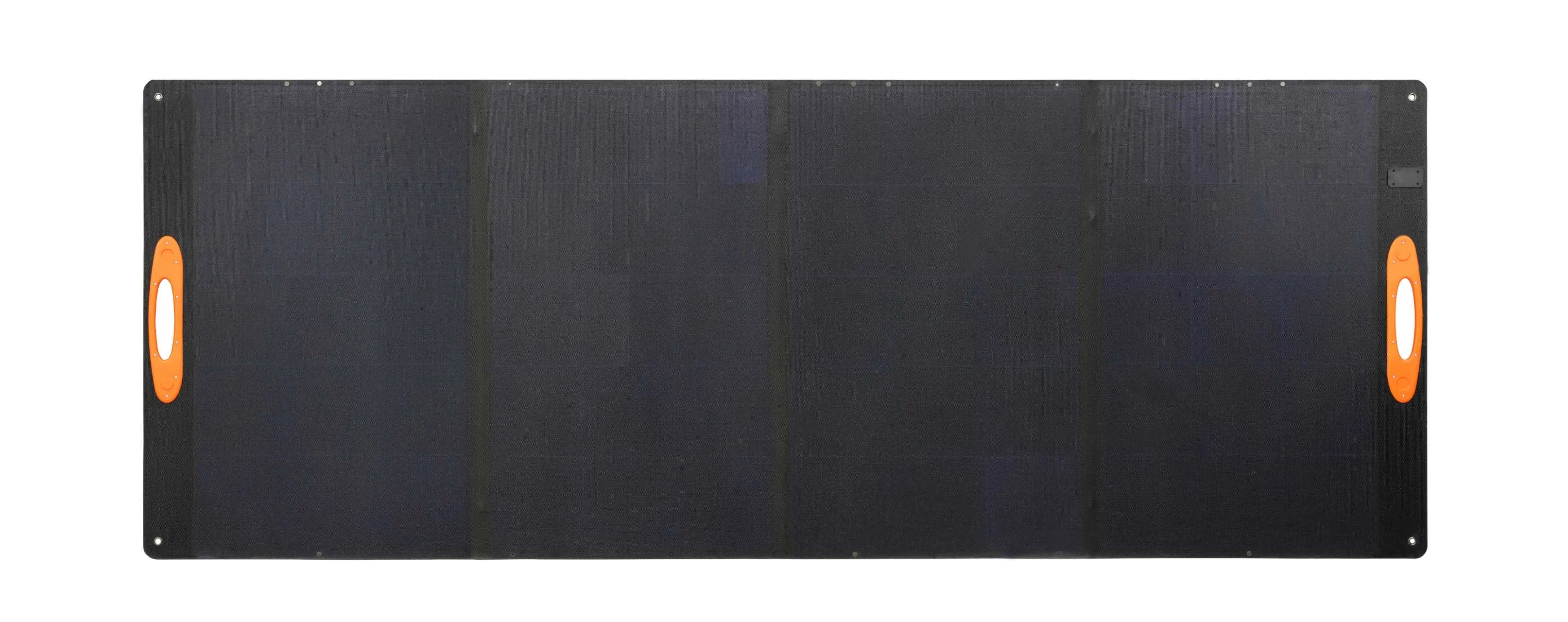
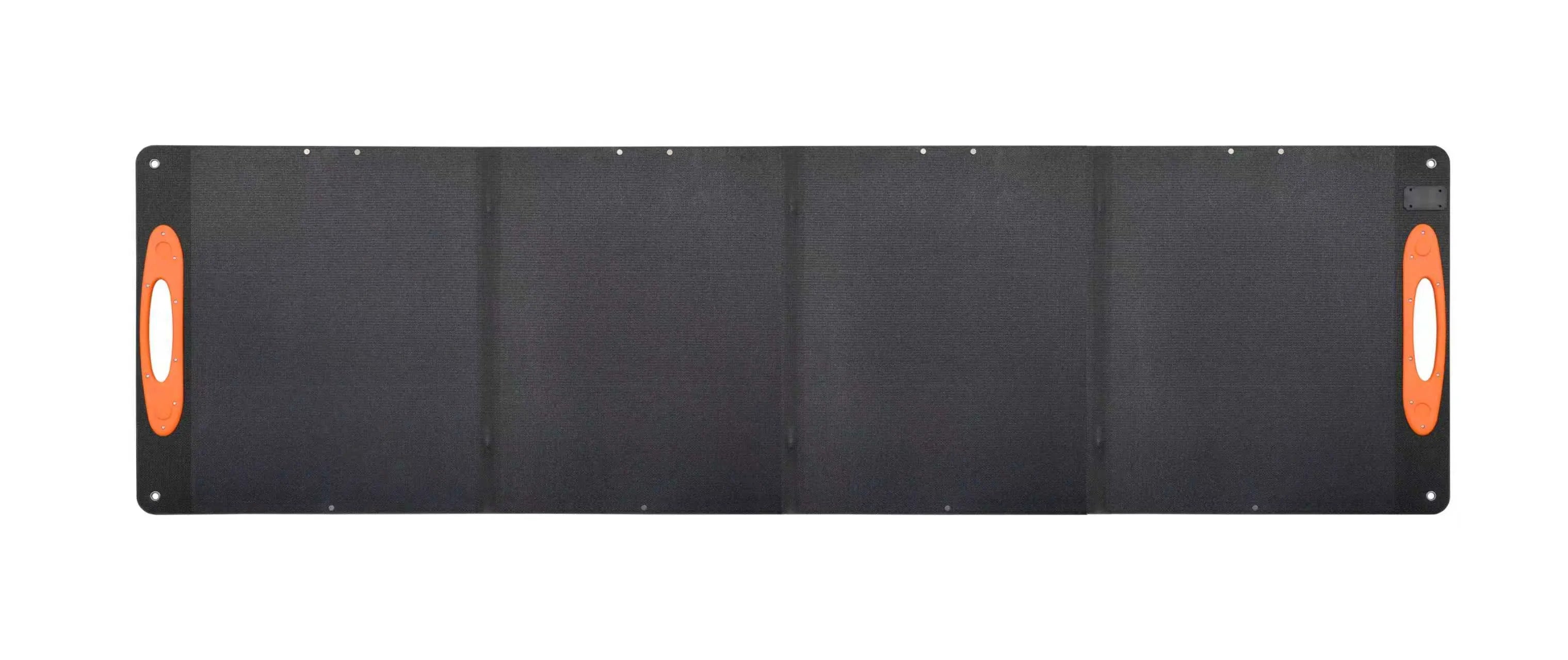
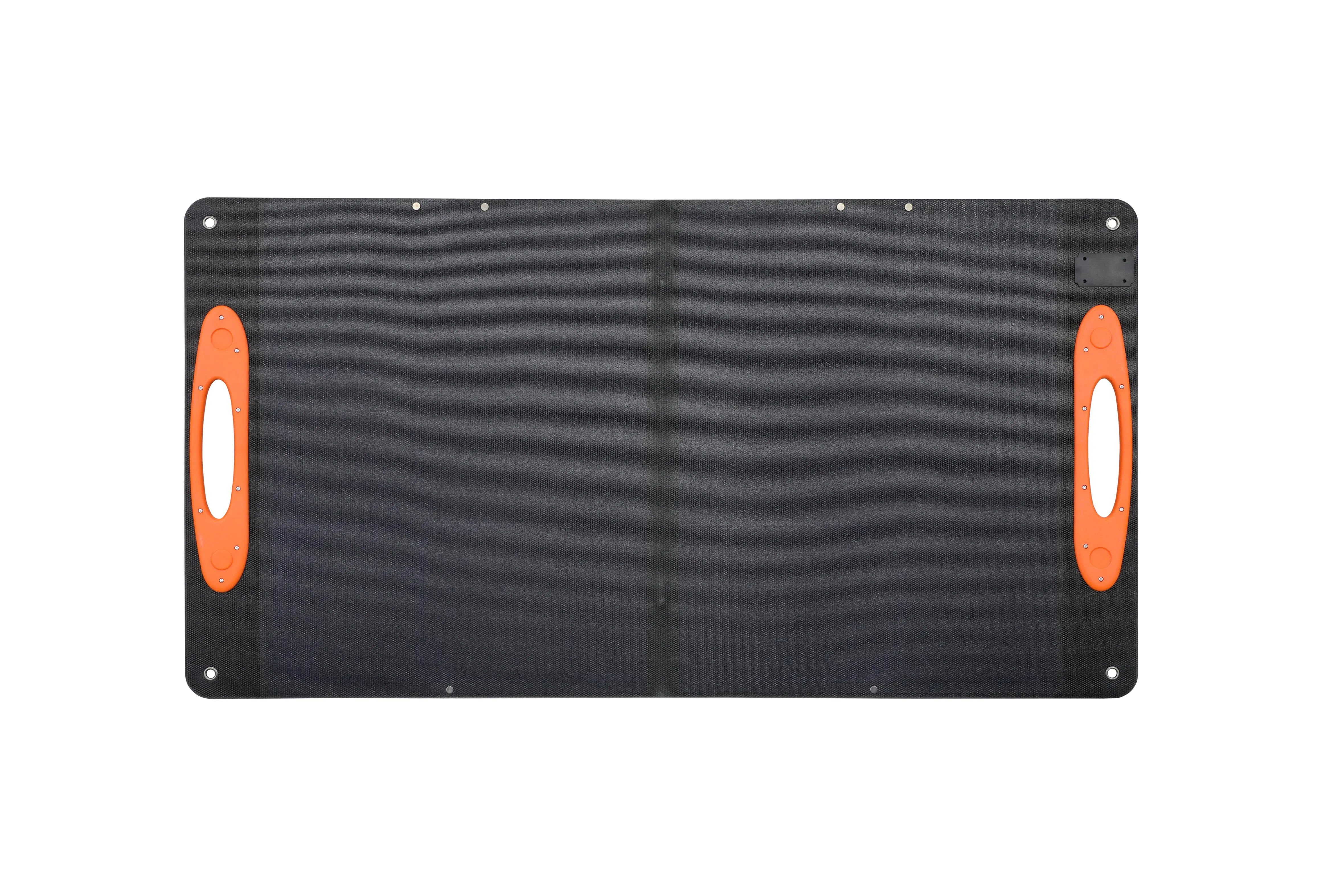
On outdoor sites with good sun, solar panels can stretch a power station's useful life across multiple days. A 400W portable solar array feeding a 3,600Wh station adds roughly 1,200–1,600Wh per sunny day — enough to offset 45–60 minutes of heavy table-saw use.
Practical tips:
- Set up panels during breaks and lunch; even partial top-ups add up.
- Use dual-input charging (AC + solar) if your station supports it, to recover faster between shifts.
- Factor in weather: overcast days may deliver 20–40% of rated panel output.
Safety Notes for Job Site Battery Use
- Keep the station ventilated. High-wattage inverters generate heat. Do not enclose the unit in a toolbox or cabinet while running a table saw.
- Use the right cable gauge. A 1,500W load at 120V pulls ~12.5A. Thin extension cords create voltage drop, which can trigger the station's low-voltage protection or overheat the cable.
- Grounding. Some power stations have floating neutral outputs. If your saw has a ground-fault sensor, test compatibility before relying on it for critical work.
- Transport. LiFePO4 batteries are safe for vehicle transport, but avoid leaving any battery in a closed vehicle above 45°C for extended periods.
Frequently Asked Questions
Will a 2,000W power station run a 15-amp table saw?
Maybe, but it depends on the surge. A 15A @ 120V saw is rated for 1,800W running, but starting surge can hit 3,500W+. A 2,000W continuous / 3,000W peak station may trip on startup. For reliable operation, look for 3,000W+ continuous output or a soft-start motor accessory.
How many cuts can I make before the battery dies?
It depends on cut duration and depth. A 3,600Wh station running a 1,500W saw delivers ~2.2 hours of continuous cutting. At 20 seconds per rip cut, that is roughly 400 cuts — more than enough for a full day of framing or cabinet work with idle time between cuts.
Is a battery power station cheaper than a gas generator for job sites?
Over 2–3 years, often yes. Battery stations have no fuel cost, minimal maintenance, silent operation, and zero emissions — which matters for indoor renovations, enclosed decks, and noise-restricted sites. The upfront cost is higher, but total cost of ownership drops sharply for daily users.
Bottom Line
A quality portable power station can absolutely run a table saw — but only if you match the station's surge and continuous ratings to the saw's real-world load. Use the runtime tables above to size your battery, plan for duty cycle, and consider solar top-up for multi-day projects.
Whether you need a high-output station for contractor-grade tools or a compact unit for mobile repairs, iFORWAY builds portable power solutions for every job site. Request a quote for bulk contractor pricing, or explore our OEM/ODM program for custom energy storage tailored to your tool fleet.
