



Introduction: The Biggest Mistake Most Buyers Make
When choosing a power bank, most people focus on just one number:
👉 mAh (battery capacity)
It sounds logical—the bigger the number, the better the power bank.
But here’s the truth:
👉 Capacity alone does NOT determine performance.
In fact, many users end up with a high-capacity power bank that still feels slow and frustrating.
Why?
Because they ignored the other half of the equation:
⚡ Fast charging (power output)
What Is Capacity (mAh)?
Capacity tells you:
👉 How much energy a power bank can store
Capacity Example
Typical capacities:
-
10,000mAh → light use
-
20,000mAh → daily + travel
-
25,000mAh → high-demand usage
👉 Think of it like a fuel tank:
-
Bigger tank = longer usage
-
But not necessarily faster performance
What Is Fast Charging (W)?
Fast charging refers to:
👉 How quickly energy is delivered
Measured in watts (W)
Fast Charging Example
Typical power levels:
-
10W–20W → basic phone charging
-
30W–65W → tablets & small laptops
-
100W+ → full laptop performance
👉 Think of it like water flow:
-
Capacity = tank size
-
Power = how fast water flows
Fast Charging vs Capacity: The Core Difference
| Feature | Capacity (mAh) | Fast Charging (W) |
|---|---|---|
| What it affects | How long it lasts | How fast it charges |
| User experience | Endurance | Speed |
| Common mistake | Overvalued | Undervalued |
👉 Simple truth:
⚡ Big battery + slow output = frustrating
⚡ Smaller battery + fast output = usable
Real-World Comparison (This Changes Everything)
Scenario 1: Low Power, High Capacity
-
25,000mAh
-
20W output
👉 Result:
-
Charges phone slowly
-
Cannot charge laptops
-
Feels outdated
Scenario 2: Balanced Setup
-
20,000mAh
-
65W output
👉 Result:
-
Fast phone charging
-
Can charge laptops
-
Much better usability
Scenario 3: High Capacity + High Power (Best)
-
25,000mAh
-
100W+ output
👉 Result:
-
Fast + long-lasting
-
Multi-device charging
-
Full laptop support
👉 This is the real upgrade.
Why Fast Charging Matters More Than Ever (2026 Reality)
Modern devices are power-hungry:
-
Smartphones → fast charging standard
-
Tablets → high consumption
-
Laptops → USB-C PD charging
👉 If your power bank is slow:
-
You wait longer
-
You lose productivity
-
You can’t keep up
The Ideal Strategy: Capacity × Power
Here’s the formula smart users follow:
👉 Performance = Capacity × Output Power
Best combinations:
-
Casual users → 10K + 20W
-
Daily users → 20K + 30–65W
-
Power users → 25K + 100W+
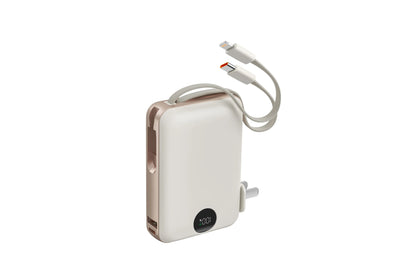
Why iFORWAY Combines Both (And Wins)
Most brands force you to choose:
-
High capacity OR
-
High power
⚡ iFORWAY approach:
👉 You get BOTH
-
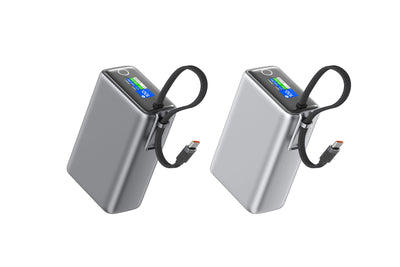
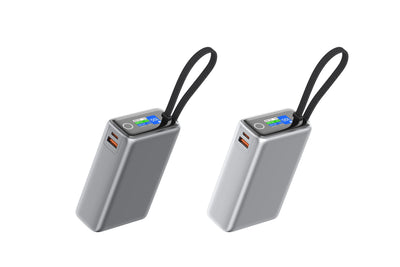
25,000mAh capacity
-
Up to 170W total output
-
Multiple 100W USB-C ports
-
Charge laptop + phone simultaneously
-
Built-in cables
Real advantage:
👉 Not just a power bank
👉 A portable power system
Which Matters More: Final Answer
If you must choose:
👉 Power (W) matters more than capacity
Because:
-
Without power → you can’t use the energy efficiently
-
Without capacity → you just recharge more often
👉 Best solution:
⚡ High capacity + high power = best experience
FAQs
Q1: Is higher mAh always better?
👉 No—only if paired with sufficient power
Q2: Can a low-power power bank charge a laptop?
👉 Usually no
Q3: Does fast charging damage devices?
👉 No (with proper protocols like PD)
Q4: What’s the best spec in 2026?
👉 25,000mAh + 100W+ output
Conclusion: Stop Choosing—Start Combining
Here’s the reality:
👉 Capacity tells you how long
👉 Power tells you how usable
If you want:
-
Fast charging
-
Long-lasting power
-
Multi-device support
👉 A high-output, high-capacity power bank like iFORWAY is the only real solution
