



Introduction: The Hidden Gap Most People Underestimate
At first glance, choosing between a 10,000mAh and a 25,000mAh power bank seems simple.
👉 One is smaller
👉 One is bigger
But in reality, the difference is not just about size.
It’s about:
-
How long your devices last
-
Whether you run out of power
-
Whether your power bank can actually keep up with modern devices
👉 This is not a small upgrade.
👉 This is a completely different usage level.
10000mAh vs 25000mAh: The Real Difference
On paper:
-
10,000mAh
-
25,000mAh (+150% capacity increase)
In real-world usable power:
-
10K → ~6,000–7,000mAh usable
-
25K → ~15,000–17,500mAh usable
👉 That’s more than double the usable power
Charging Comparison: How Big Is the Gap?
Smartphone Charging
10,000mAh:
-
iPhone → 1.5–2 charges
25,000mAh:
-
iPhone → 4–6 charges
👉 Difference:
-
10K → barely lasts a day
-
25K → lasts multiple days
Laptop Charging
10,000mAh:
❌ Cannot charge laptops effectively
25,000mAh:
-
MacBook Air → ~1 full charge
-
MacBook Pro → partial charge
👉 This alone makes them completely different products
Portability vs Power: What You Gain (and Lose)
10,000mAh advantages:
-
Lightweight
-
Pocket-friendly
-
Good for minimal users
25,000mAh advantages:
-
Multi-device charging
-
Long travel support
-
Laptop compatibility
-
No battery anxiety
👉 Truth:
-
10K = convenience
-
25K = capability
Real-Life Scenarios: Where 10K Fails (and 25K Wins)
Scenario 1: Daily City Use
-
10K → OK
-
25K → overkill
Scenario 2: Travel Day
-
Navigation + photos + video
👉 10K:
-
Dies by afternoon
👉 25K:
-
Lasts all day
Scenario 3: Remote Work / Digital Nomad
-
Laptop
-
Phone
-
Accessories
👉 10K:
-
Not usable
👉 25K:
-
Fully capable
Scenario 4: Group Charging
-
Friends / family
👉 10K:
-
One device only
👉 25K:
-
Multiple users supported
The Biggest Mistake: Only Looking at mAh
Here’s what most people miss:
👉 Capacity ≠ power performance
What really matters:
-
Output (W)
-
Number of ports
-
Fast charging protocols
Example:
-
10K + 20W → slow phone charging
-
25K + 100W → laptop + phone + tablet
👉 That’s a massive difference in real use
Why 25,000mAh Power Banks (Like iFORWAY) Are Becoming the New Standard
Modern devices demand more power.
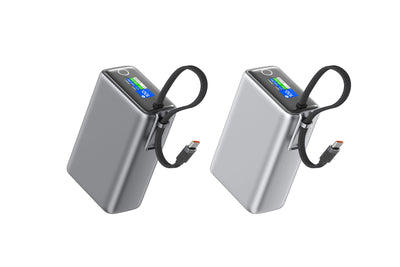
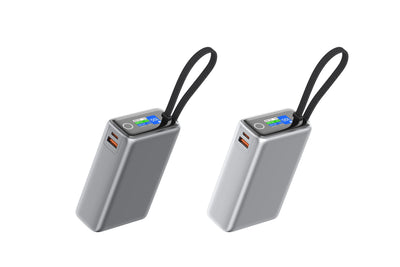
⚡ iFORWAY 25K advantages:
-
Up to 170W total output
-
Multiple 100W USB-C ports
-
Charge up to 5 devices simultaneously
-
Built-in cables
-
Smart digital display
Real difference:
👉 Traditional 10K:
-
Emergency backup
👉 iFORWAY 25K:
-
Full power system
10000mAh vs 25000mAh: Which One Should You Choose?
Choose 10,000mAh if:
-
You only charge your phone
-
You prioritize size
-
You use it occasionally
Choose 25,000mAh if:
-
You travel
-
You use laptops
-
You charge multiple devices
-
You want all-day reliability
👉 Honest answer:
⚡ Most users in 2026 should choose 25,000mAh
FAQs
Q1: Is 25,000mAh too big?
👉 Slightly heavier—but worth it
Q2: Is 10,000mAh outdated?
👉 Not outdated—but limited
Q3: Can 10K fast charge?
👉 Yes—but only phones
Q4: Is 25K allowed on planes?
👉 Yes (<100Wh limit)
Conclusion: This Is Not an Upgrade—It’s a Category Change
Here’s the truth most brands won’t say:
👉 10,000mAh and 25,000mAh are not competitors
👉 They serve completely different needs
If you want:
-
Real power
-
Multi-device charging
-
Laptop support
-
Travel reliability
👉 A 25,000mAh high-output power bank like iFORWAY is the clear winner
