



Direct answer: most European households need a battery between 5 and 10 kWh of usable capacity to cover evenings, nights and short outages, and 10–16 kWh if they also want to ride through a full night on a heat pump or an electric cooker. The calculation is not mysterious — it is three numbers: how many kWh you use in a day (annual consumption ÷ 365), how many kilowatts you draw at peak (which decides the inverter, not the battery), and how many hours of autonomy you actually want. Get those three right and the rest of the spec sheet follows. Get them wrong and you either buy a battery that is flat by 21:00 or one that never pays for itself.
Sizing is also where most buying mistakes happen, because vendors sell capacity in ideal figures and households consume electricity in ugly, lumpy reality. This guide walks through the maths with European household data, then shows the runtime tables and the honest limits of the technology.
The three numbers that decide everything
1. Daily energy. Take your annual consumption and divide by 365. A two-person flat in Central Europe typically lands at 2,000–2,800 kWh/year — call it 6–8 kWh per day. A three-to-four-person single-family house runs 3,500–5,000 kWh/year, or 10–14 kWh/day. Each all-electric add-on stacks on top: a heat pump in a well-insulated 120 m² house adds roughly 4,000–6,000 kWh/year, an electric car driven 15,000 km adds about 2,500–3,000 kWh/year, and a heat-pump water heater or dryer each add a few hundred.
2. Peak power. Batteries are rated in kWh and kW, and buyers only look at the first. A kettle (2 kW), an induction hob with two rings on (3–4 kW) and a fridge compressor starting up can stack into a 5–7 kW spike — and if your inverter tops out at 3 kW, the system either drops loads or trips, no matter how full the battery is.
3. Autonomy target. Covering evening plus night typically means 50–60% of daily consumption. Covering a full 24-hour outage means essentially 100% of it. Those are different batteries.
What that means in practice
| Household profile | Annual use | Daily use | Evening + night (~55%) | Suggested usable battery |
|---|---|---|---|---|
| 1–2 person flat, gas cooking | 2,000–2,800 kWh | 6–8 kWh | 3.5–4.5 kWh | 5 kWh |
| Family house, 3–4 people | 3,500–5,000 kWh | 10–14 kWh | 5.5–8 kWh | 8–10 kWh |
| House + air-source heat pump | 7,500–11,000 kWh | 20–30 kWh | 11–16 kWh | 10–16 kWh + PV |
| All-electric + EV charging at home | +2,500–3,000 kWh for the car | +8 kWh on charge days | size to schedule, not to peak | 10–16 kWh + load management |
Read that last row carefully: you do not size a battery to swallow a whole EV charge blindly. You schedule it — slow overnight charging at 2–3 kW, after the household peak, off solar in summer — and the same 10 kWh battery covers the car and the kettle without doubling in price.
Nameplate versus usable: why "10 kWh" delivers about 8
Three losses stand between the sticker figure and the energy that actually reaches your toaster:
- Depth of discharge. Quality LiFePO4 systems allow 90–100% DoD, but most integrators reserve a bottom buffer — count on 90% of nameplate as usable.
- Round-trip efficiency. Charging and discharging loses roughly 5–10%; LFP systems run about 90–95% round-trip.
- Inverter conversion. DC battery to AC household power costs another 3–6%.
Stack those and a nameplate 10 kWh battery delivers roughly 7.5–8 kWh at the wall socket. Size with the delivered figure, not the sticker. This is also why two quotes both labelled "10 kWh" can behave completely differently — ask every vendor for usable AC kWh and cycle life at that depth, in writing. (At OEM/ODM level these parameters are specified in the datasheet; retail buyers should demand the same document.)
Runtime tables: what a battery actually carries through a blackout
Capacity means nothing without a load profile. Here is what real household loads draw, and how long different usable capacities hold out:
| Load | Typical draw | 5 kWh usable | 10 kWh usable | 16 kWh usable |
|---|---|---|---|---|
| Fridge + freezer (cycling) | 0.1–0.15 kW avg | ~40 h | ~80 h | ~128 h |
| LED lighting, router, laptops | 0.15–0.3 kW | ~20 h | ~40 h | ~64 h |
| Those two combined | ~0.4 kW | ~12 h | ~25 h | ~40 h |
| + induction cooking, kettle, TV | ~1.2 kW avg | ~4 h | ~8 h | ~13 h |
| + heat pump (winter, mild) | ~2.5 kW avg | 2 h | 4 h | 6.5 h |
Two conclusions fall straight out of the table. First, essentials are cheap to run and heavy loads are expensive — a fridge and lights cost under 10 kWh per day, while a heat pump eats that before lunch. Second, a battery that only covers the essentials turns a 24-hour outage into a non-event; a battery that tries to run everything at full comfort needs 15 kWh and up, plus solar to refill.
Also check surge: compressor motors and pumps draw 2–3× their running current for a second at startup. An inverter rated 4 kW continuous with 8 kW surge handles a fridge and a well pump; a 3 kW hard-limited unit may not.
The solar side: can the battery refill itself?
A backup battery without recharge is just a big power bank. In Central Europe, 1 kWp of panels produces roughly 2.5–3 kWh per day averaged over the year — but the seasonal spread is brutal: about 1–1.5 kWh/day per kWp in December versus 4–6 kWh/day in June. A 4 kWp rooftop array therefore refills a 10 kWh battery in a day of average sun from March to October, and cannot reliably do it in November–January.
The honest design rule: solar covers the battery between spring and autumn; winter autonomy comes from the grid tariff strategy — charge cheap overnight under a time-of-use tariff and discharge in the expensive evening peak. Households pairing a battery with dynamic tariffs regularly cut 30–50% off the bill even in winter, when the solar argument disappears. We covered the tariff-arbitrage maths separately for time-of-use rates and the payback numbers by country.
Architecture: rack batteries + hybrid inverter, or all-in-one wheeled units?
There are two credible ways to build whole-home storage in 2026, and the right answer depends on whether you own the building:
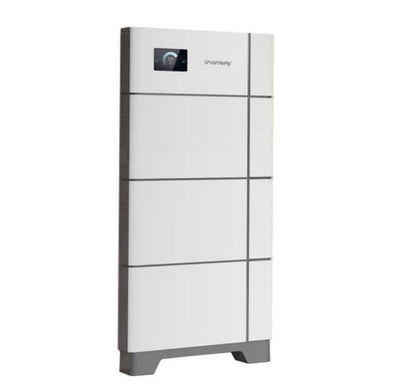
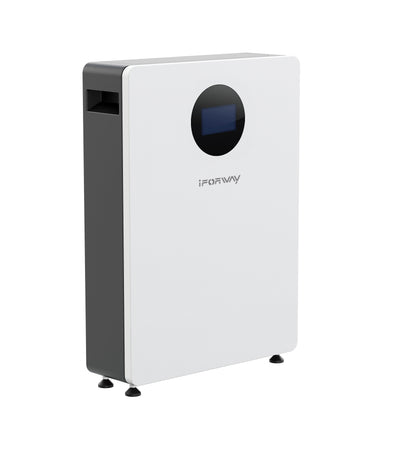
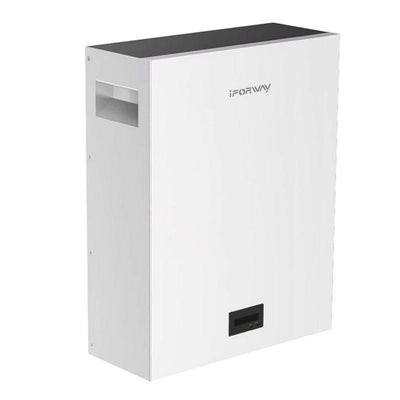
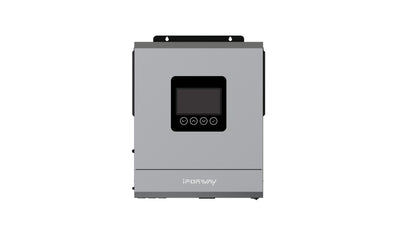
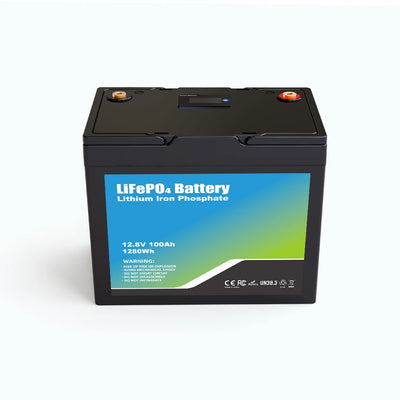
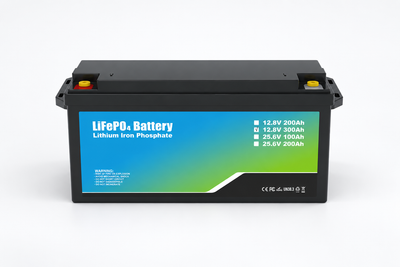
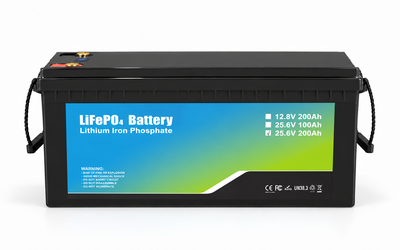
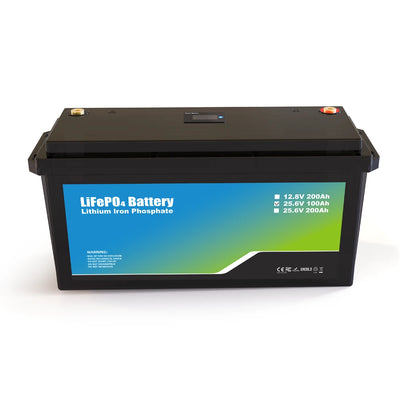
- Wall/rack-mounted 48 V LiFePO4 modules with a hybrid inverter — the classic ESS. Start with one 5 kWh module and stack to 15–30 kWh as needs grow; the hybrid inverter handles PV, grid and backup switching automatically, and an automatic transfer switch moves essential circuits over in milliseconds. This is the route for owned homes with a utility room and a long horizon — 48 V packs like a 48 V 314 Ah (≈16 kWh) LiFePO4 module deliver the lowest cost per kWh at scale.
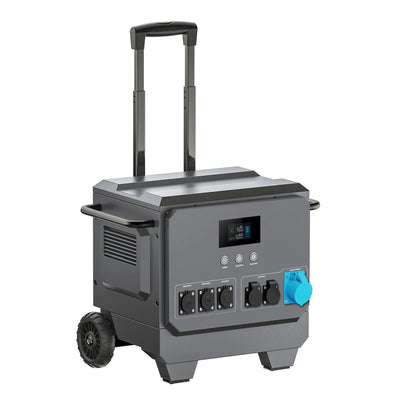
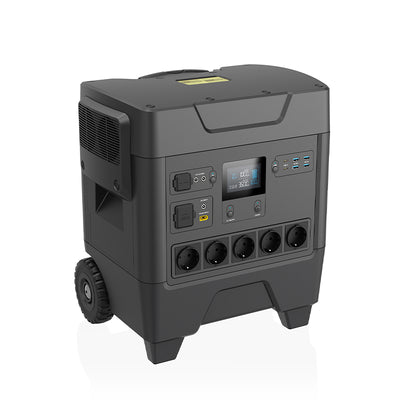
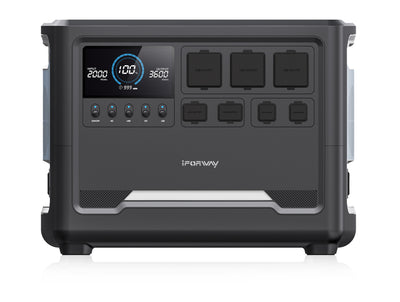
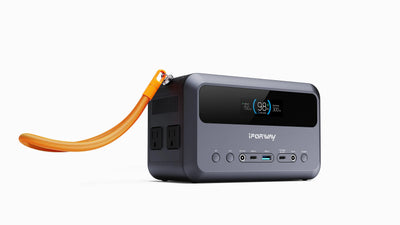
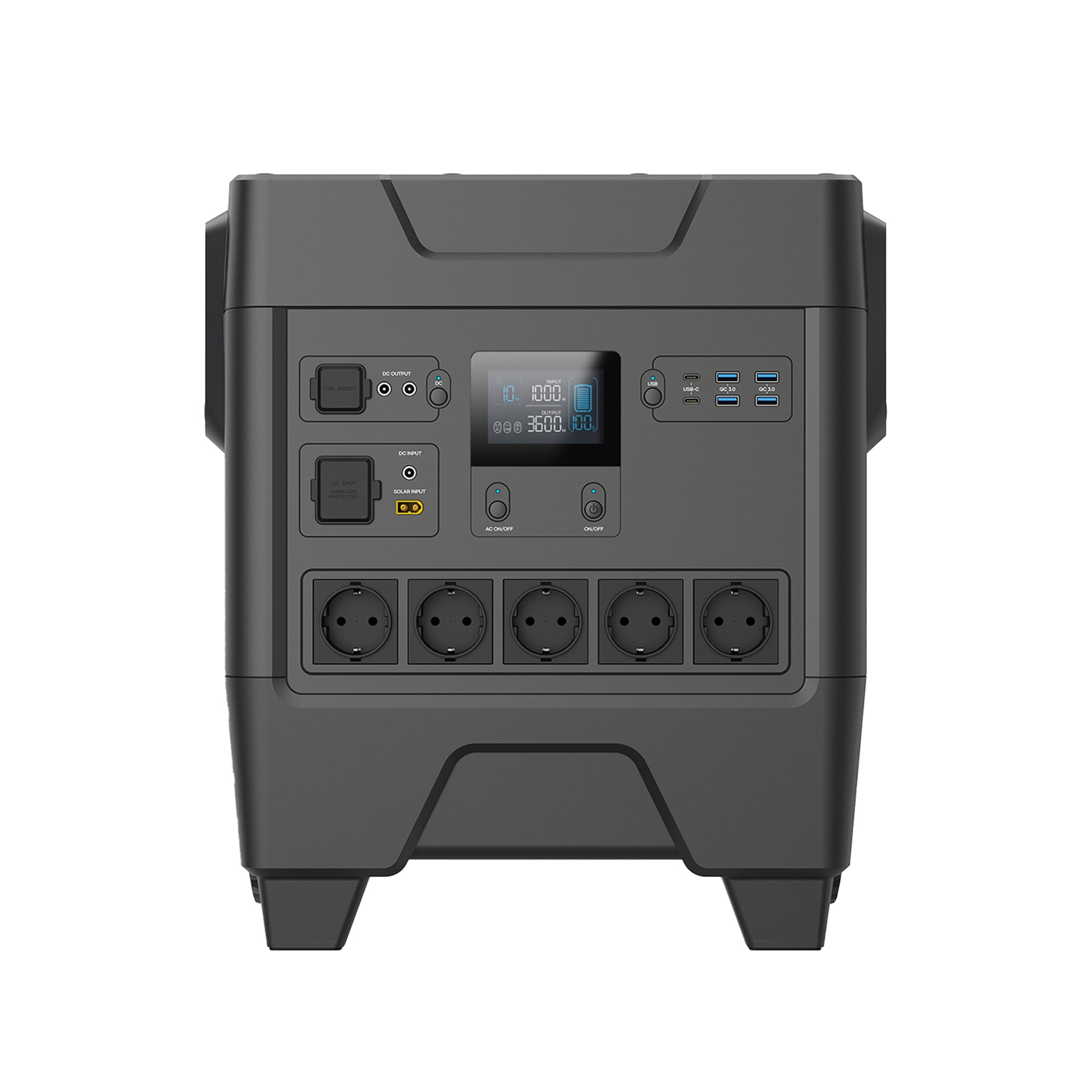
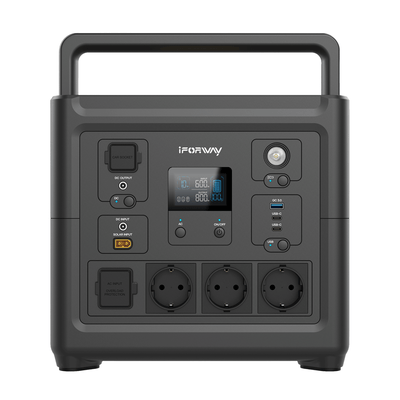
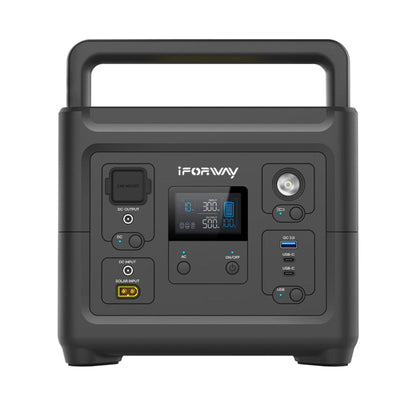
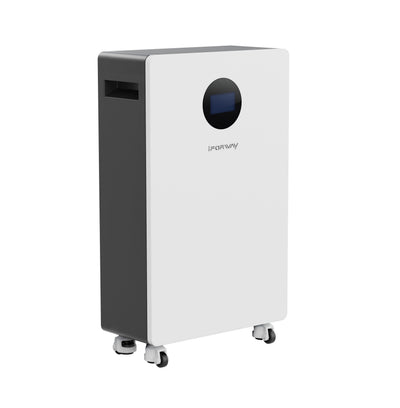
- All-in-one wheeled power stations — 3–6 kWh units that plug into any socket, need no electrician and can move with you. The M5003 (5 kWh / 6,000 W, 12 kW peak) or the M5002 (5 kWh / 6,000 W) run a household's essentials through an outage and recharge from AC or solar, while the HS3605 (3 kWh / 3,000 W) covers flats and partial-backup duty. Renters, small houses and anyone avoiding installation paperwork land here.
The wheeled route also scales: two 5 kWh units in parallel behave like a 10 kWh ESS, with the bonus that each unit can still go camping, to the job site or to a second property. The rack route wins on cost per kWh, tidiness and whole-house integration.
Where a whole-home battery stops making sense
No guide is complete without the limits:
- Electric heating in winter. Direct-resistive heating at 5–10 kW continuous will flatten any sensible battery in under two hours. Batteries pair well with heat pumps (2–3× efficient), badly with panel heaters.
- Very low consumption. A flat using 5 kWh/day cannot earn back a 10 kWh system's spread over grid prices in a reasonable time — size down or skip.
- Cheap flat-rate grids. Where electricity is under €0.15/kWh with no dynamic tariff, the arbitrage case is thin; the backup case may still carry it.
- Expecting the battery to run everything forever. Design for a graceful degradation plan: essential circuits, load shedding, then PV refill. Whole-home comfort for days is a 20+ kWh project with a generator backstop, not a 10 kWh one.
Buying checklist
- Start from your meter, not from a brochure. Annual kWh ÷ 365 = your daily number; size usable capacity to 55–100% of it depending on autonomy target.
- Convert nameplate to usable AC kWh (×0.9 DoD ×0.92 round-trip ×0.96 inverter ≈ ×0.8). Compare quotes on delivered energy.
- Check continuous and surge output against your worst-case stack — kettle + hob + fridge start-up — not against an average day.
- Insist on LiFePO4 chemistry with 3,000+ cycles rated at the offered DoD, and a 10-year warranty or better; the battery should outlive several appliance generations.
- Plan the recharge path: MPPT solar input wattage and AC recharge rate decide whether day-two of an outage is comfortable or dark.
- Leave room to expand. Modular architecture — parallel-capable units or stackable 48 V racks — keeps the first purchase from becoming a dead end.
Frequently asked questions
How many kWh does the average house need for battery backup?
A typical European family house consuming 3,500–5,000 kWh per year needs 8–10 kWh of usable capacity to cover an evening, a night and the morning after — roughly 10–12 kWh nameplate after conversion losses. Covering a full 24-hour blackout at normal comfort needs closer to the whole daily consumption, 12–16 kWh usable. Flats with gas cooking manage on 5 kWh.
Is a 10 kWh battery enough to run a house?
For essentials and moderate cooking, yes: 10 kWh usable runs a fridge, lighting, networking, a TV and induction cooking for a full day, with several hours of margin. It is not enough for all-electric heating in winter or for repeated high-draw loads like an unscheduled EV charge. Check the continuous power rating too — the inverter must handle your simultaneous peak draw, typically 3–6 kW.
Can I install a whole-home battery in a rented flat?
Not the wall-mounted ESS — that needs landlord consent and an electrician. But a 3–5 kWh portable power station with UPS-style pass-through keeps a router, fridge and work devices alive through outages, charges from a wall socket overnight on a cheap tariff and from a balcony solar panel in summer, and moves with you when the lease ends. It is the pragmatic 80% solution for renters.
Bottom line
Sizing a whole-home battery is arithmetic, not alchemy: daily kWh from your meter, usable capacity at 55–100% of it, an inverter that survives your kettle, and a recharge path for day two. Buy the delivered kilowatt-hour, not the sticker one, and buy architecture that can grow. Households that follow those four rules end up with systems that pay back in five to nine years under Central European tariffs and pay off immediately in peace of mind during the first long outage.
iFORWAY manufactures LiFePO4 storage from 192 Wh portable units to 5 kWh wheeled systems and 48 V rack batteries with hybrid inverters — see the complete home energy storage lineup, or, if you are a distributor or project developer, review our ODM/OEM programme and request a quote — our engineering team replies within 24 hours.
