
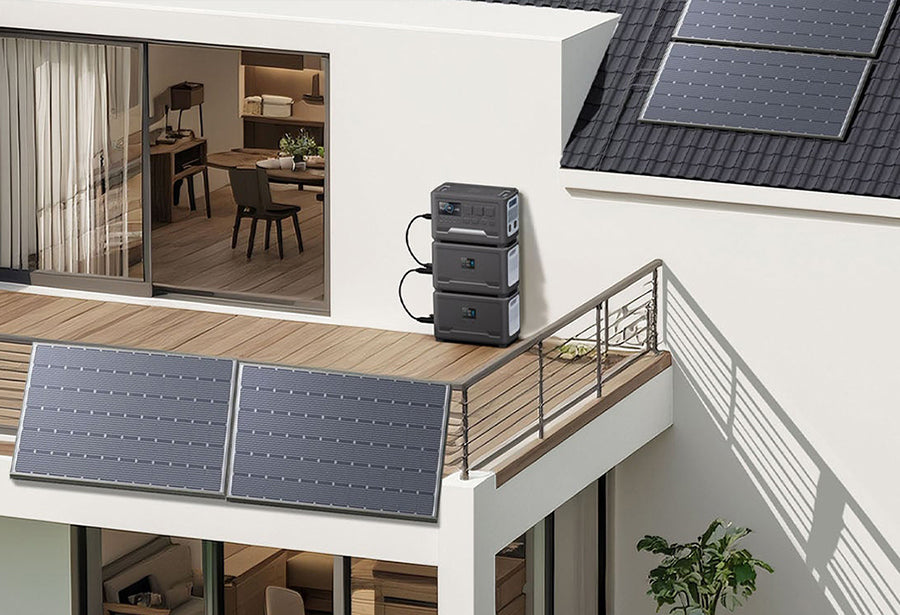
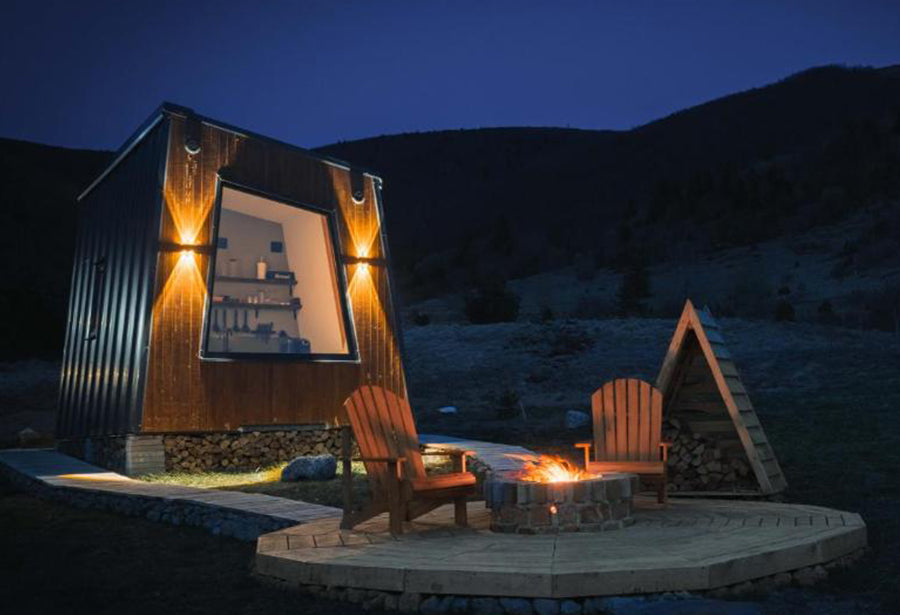
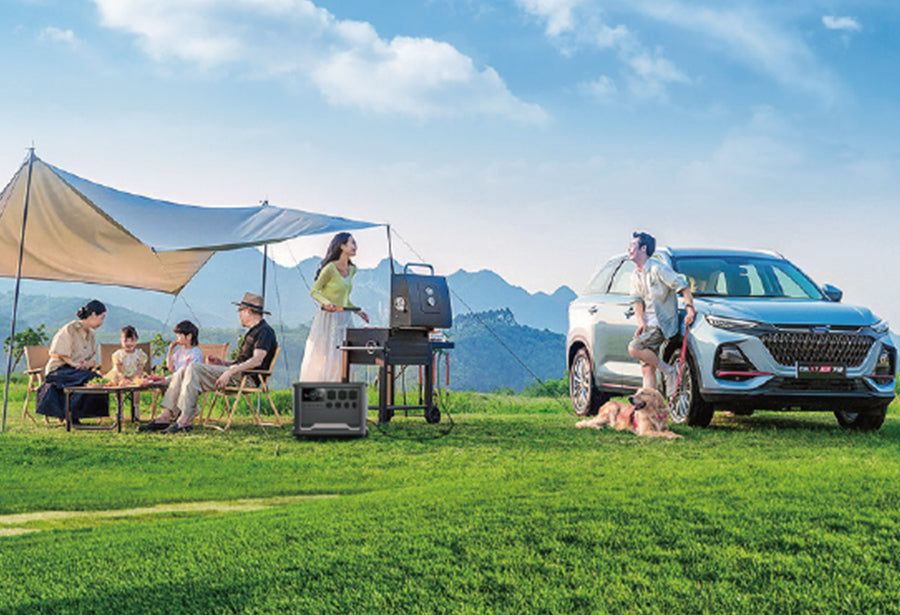

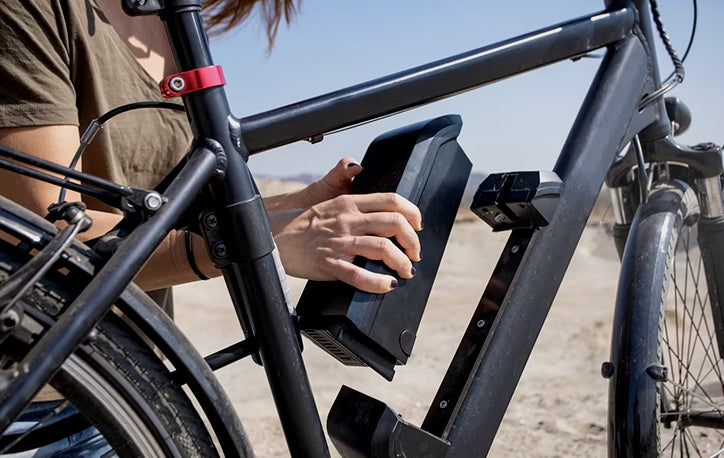


You bought a portable power station for off-grid weekends, a backup power source during blackouts, or to live that van-life dream — but the included AC charger tethers you to a wall outlet. A solar panel for power station charging unlocks the real freedom: silent, fuel-free recharging anywhere the sun shines. The only question is how many watts of solar do you actually need?
This 2026 sizing guide walks you through the math in plain language, gives you a ready-to-use chart for the most common station capacities, and helps you avoid the two mistakes that ruin most first-time solar setups: undersized panels that never top off the battery, and oversized arrays that the station cannot accept.
Why Solar Is the Best Charging Companion for a Power Station
Modern LiFePO4 power stations are essentially large battery packs with a built-in inverter and charge controller. Plug in a solar panel and you have a fully self-sufficient energy system: no fuel, no noise, no fumes, and free power for the life of the panel. Solar also stretches the value of the station itself — a 1kWh unit that used to last a single camping weekend becomes an indefinite off-grid power source when topped up daily.
- Silent operation — no generator noise to disturb campground neighbors or sleeping kids.
- Zero fuel cost — sunlight is free; you only paid for the panel once.
- Low maintenance — a quality panel lasts 20–25 years with nothing but an occasional wipe-down.
- Indoor-safe — LiFePO4 chemistry produces no carbon monoxide, so you can leave the station charging under a window while you sleep.
Three Numbers You Must Know Before Sizing
Open the spec sheet for your power station and grab these three numbers. They drive every sizing decision that follows.
- Battery capacity in watt-hours (Wh). A 1,024Wh station holds roughly 1kWh of usable energy. Look for "capacity" or "battery capacity," not peak power output.
- Maximum solar input watts. The station's MPPT controller caps how much panel wattage it can accept. Hooking a 400W panel to a station rated for 200W input simply throws away the extra power — the controller clips anything above its rating.
- Solar input voltage window (Voc and Vmp). The station's MPPT accepts a range, usually 12–60V or 12–150V open-circuit. Your panel's Voc (open-circuit voltage) must fall inside that window, and your Vmp (voltage at maximum power) should be in the sweet spot for highest efficiency.
Solar Panel Size Chart by Power Station Capacity
Use this table as a quick reference. "Minimum for weekend use" assumes one full recharge on a sunny day. "Recommended for daily off-grid" assumes 4–6 peak sun hours and topping off every day.
| Station Capacity | Minimum Panel (weekend) | Recommended Panel (daily) | Daily Solar Yield (5 sun hrs) |
|---|---|---|---|
| 300–500 Wh | 60–80 W | 100–120 W | 350–600 Wh |
| 700–1,000 Wh | 100–150 W | 200 W | 700–1,000 Wh |
| 1,500–1,800 Wh | 200 W | 300–400 W | 1,200–2,000 Wh |
| 2,000–2,400 Wh | 300 W | 400–600 W | 1,800–2,800 Wh |
| 3,000–3,600 Wh | 400 W | 600–800 W | 2,800–4,200 Wh |
| 5,000 Wh+ | 600 W | 1,000–1,500 W | 5,000–7,500 Wh |
As a rule of thumb, target panel wattage equal to 20–30% of station capacity for weekend use, and 30–50% for daily off-grid operation. A 1,800Wh station paired with a 400W panel is a great everyday sweet spot; bumping to 600W shortens recharge time but rarely pays off unless you live full-time off-grid.
MPPT vs PWM: Why It Matters
Every quality power station since 2022 ships with an MPPT (Maximum Power Point Tracking) charge controller. MPPT converters harvest 20–30% more energy from the same panel compared to old-school PWM controllers, especially in cold or cloudy weather. Two practical implications:
- You can use higher-voltage panels. MPPT accepts a wide input range, so a 36V nominal panel works as well as an 18V panel — sometimes better, because higher voltage means lower current and less cable loss.
- Partial shade is less catastrophic. A PWM controller drops output dramatically when even a single cell is shaded; MPPT gracefully reduces harvest and keeps charging.
If you are pairing a panel with a station made before 2022, double-check the controller type. Older PWM units require a panel whose Vmp closely matches the station's battery voltage (typically 18V for a 12V system).
Choosing Between Rigid, Folding, and Briefcase Panels
Panel form factor matters as much as wattage for real-world use.
- Rigid monocrystalline (glass + aluminum frame). Highest efficiency per square foot, longest lifespan (25 years), lowest cost per watt. Best for permanent rooftop or ground-mount installations on cabins, RVs, and tiny homes.
- Folding / portable panels. 100W to 400W foldable panels are the right choice for camping, overlanding, and emergency kits. They pack small, weigh 4–8kg, and include stands for angle adjustment. Slightly less efficient than rigid glass panels but vastly more flexible.
- Briefcase-style panels. Two rigid glass panels hinged together with a carry handle. A middle ground between rigid and folding — heavier than folding panels, but higher efficiency and better wind tolerance.
For camping and emergency preparedness, a 200W folding panel covers almost every mid-size station. For full-time off-grid, mount 400W+ of rigid panels on the roof and forget about them.
Common Mistakes That Kill Solar Charging Performance
1. Buying an oversized panel
More watts are not always better. If your station's max solar input is 200W, a 400W panel does not charge twice as fast — the controller caps the harvest at 200W and you wasted 200W of panel cost. Match the panel to the controller's rating, not to wishful thinking.
2. Ignoring voltage window
A panel with Voc above the station's input ceiling triggers a protection fault and refuses to charge. A panel with Vmp below the minimum MPPT threshold produces a tiny harvest on sunny days and zero on cloudy ones. Always check the panel's electrical specs against the station's input range before buying.
3. Poor angle and orientation
Laying a panel flat on the ground in summer gives up 30–40% of its output. Tilt it to face the sun at an angle roughly equal to your latitude in winter and your latitude minus 15° in summer. Even small adjustments — rotating the panel every two hours on a campsite — boost daily yield meaningfully.
4. Forgetting about cable gauge
A long, thin extension cord from panel to station can drop voltage below the MPPT's sweet spot. Use the panel's own MC4 cables and a station-side adapter of the correct gauge. For runs over 5 meters (16ft), 10 AWG wire is a safer minimum than 12 AWG.
Recommended Pairings for iFORWAY Stations
- iFORWAY G02 portable power station (~1kWh class). Pairs naturally with a 100–200W folding panel for weekend camping and laptop-charging on the road. Stows behind a car seat.
- iFORWAY HS1800 solar generator (1.8kWh class). A 200–400W panel array tops it off in 5–7 sun hours. Excellent fit for medium-size RV solar rigs and off-grid cabin lighting circuits.
- iFORWAY HS3600 portable power station (3.6kWh class). Pair with 600–800W of rigid or folding panels for full-day home backup recharging or serious van-life solar. The HS3600's high solar input ceiling lets it harvest faster than smaller stations.
All iFORWAY stations ship with built-in MPPT controllers and the industry's most common solar connector, so they accept mainstream 18V/36V panels out of the box.
For OEM & Integrator Partners
If you are building your own solar generator brand or assembling off-grid energy kits for retail, iFORWAY runs full OEM/ODM programs covering panel-station pair validation, custom cable harnesses, and turnkey packaging. Discuss your product roadmap on our OEM/ODM energy storage page.
Frequently Asked Questions
Can I use any solar panel with any power station?
Almost — provided three numbers line up. The panel's Voc must be inside the station's solar input voltage window, the panel's wattage should not exceed the station's maximum solar input, and the connector type must match (or be adaptable via an MC4-to-XT60 or MC4-to-Anderson adapter that ships with most stations).
How long does it take to charge a power station with solar?
Divide the station's capacity (Wh) by panel output (W) multiplied by 0.75 efficiency loss. A 1,800Wh station with a 400W panel and 5 peak sun hours: 1,800 ÷ (400 × 0.75) = 6 hours. Real-world results vary with sun angle, temperature, and shading.
Do solar panels work on cloudy days?
Yes, but at reduced output — typically 10–25% of rated wattage on overcast days, and 40–60% on partly cloudy days. Quality MPPT controllers extract noticeably more energy in low light than PWM controllers do.
Can I leave the solar panel plugged in all the time?
Yes. Quality LiFePO4 stations have built-in charge controllers that stop accepting input once the battery is full. Leaving the panel connected indefinitely is the standard practice for off-grid solar installations.
Sun-Powered Independence Starts with the Right Pairing
The portable power station you already own becomes a true off-grid energy system the moment you add the right solar panel. Match the panel's voltage to the station's MPPT window, size wattage at 20–50% of battery capacity, and tilt the panel toward the sun. With those three boxes checked, your station becomes a perpetual power source that asks for nothing but daylight.
Browse iFORWAY's complete lineup of solar-ready portable power stations, or request a wholesale quote for bulk OEM solar kit assembly.
